 how-to
How to Switch Insurance Providers Easily
Table of Contents
- Review Your Current Policy and Coverage
- When Is the Best Time to Switch Insurance
- Documents Needed to Switch Insurance Providers
- Get Quotes and Compare Coverage Limits and Deductibles
- How to Cancel Your Current Insurance Policy
- Switching Insurance Without a Lapse in Coverage
- Activate Your New Policy and Confirm Effective Date
- Common Mistakes to Avoid When Switching Providers
Last Updated: August 12, 2026
Review Your Current Policy and Coverage
Before you switch insurance providers, understanding what you currently have is essential. Your existing policy contains critical details that will shape your next decision. Start by gathering your declarations page, policy documents, and any recent correspondence from your current insurer. This paperwork shows your coverage limits, deductibles, premium amounts, and the specific protections you're paying for.

Take time to review what you actually own or operate. If you're insuring a home, note its square footage, construction type, age, and any recent upgrades. For auto insurance, document your vehicle's make, model, year, and mileage. For business coverage, identify your industry classification, number of employees, and annual revenue. These details matter because they directly affect your premium and the coverage options available to you.
A common mistake is skipping this step and assuming your new policy will mirror your old one. Coverage gaps emerge when you don't clearly document what you had. Write down your liability coverage limits, deductible amounts, and any optional protections like comprehensive or collision coverage. If you've made claims in the past, note the dates and outcomes. This information helps you make an informed comparison when you're ready to switch insurance providers.
Many people also overlook their policy's effective date and renewal cycle. Knowing when your current policy expires prevents accidental lapses in coverage. Check whether your policy renews automatically or requires manual renewal. Understanding these details positions you to time your switch strategically.
When Is the Best Time to Switch Insurance
Timing matters when you decide to switch insurance providers. The ideal moment depends on your current policy's renewal date and your financial situation. If your renewal is approaching within the next 60 days, that's often the smoothest time to make a change. You can compare quotes, apply for new coverage, and have your new policy activate on the same day your current one expires.
Mid-term switching is possible but carries extra considerations. If you cancel before your renewal date, you may face cancellation fees depending on your policy terms and state regulations. Some insurers charge a small administrative fee, while others may pro-rate your refund. Understanding these potential costs helps you evaluate whether switching now makes financial sense or if waiting until renewal is smarter.
Life changes also signal the right time to switch. After a major event, buying a home, starting a business, getting married, or moving to a new state, your coverage needs shift. Your current insurer's rates might not reflect your new situation. Shopping around after these events often reveals better options tailored to your updated profile.
When is the best time to switch insurance? For most people, it's during your renewal period, when you face no penalties for moving to a new provider. However, if you're unhappy with your current insurer or found significantly better rates elsewhere, switching mid-term may still make sense despite potential fees. Calculate the difference: compare your cancellation costs against the savings your new policy offers over the remaining policy term.
Documents Needed to Switch Insurance Providers
Switching insurance providers requires specific paperwork. Gather these documents before you start shopping for quotes. Your current declarations page is non-negotiable, it lists your coverage limits, deductibles, and current premium. If you can't find a physical copy, log into your insurer's website or call their customer service to request one.
For auto insurance, you'll need your vehicle identification number (VIN), current mileage, and driving history. Most insurers pull your Motor Vehicle Record (MVR) automatically, but having this information ready speeds up the process. If you've had accidents or violations, know the dates and details. Your new insurer will discover them anyway through underwriting, so transparency upfront prevents surprises later.
For home insurance, gather your home's purchase documents or current appraisal, property tax assessment, and any home improvement receipts. Insurers want to know your home's replacement cost, which differs from its market value. If you've upgraded your roof, electrical system, or plumbing recently, document these improvements. They can lower your premium because newer systems reduce risk.
Business owners need their business license, articles of incorporation or partnership agreement, and financial statements from the past two years. Your industry classification and number of employees directly affect your commercial liability premium. If you have employees, provide payroll information. For contractors and high-risk industries, detailed information about your operations and safety protocols matters significantly.
You'll also need proof of identity and your Social Security number for underwriting purposes. Insurers perform credit checks as part of their risk assessment. Your credit score doesn't have to be perfect, but understanding it helps you anticipate pricing. Finally, keep your current insurance binder or proof of insurance handy. This document proves you maintain active coverage, which some new insurers require before activating your policy.
Get Quotes and Compare Coverage Limits and Deductibles
Getting multiple quotes is the foundation of switching insurance providers wisely. Contact at least three different insurers to understand the range of options and pricing available. When you request quotes, provide identical information to each company so the comparisons are meaningful. Small differences in how you describe your situation can dramatically affect the quote you receive.
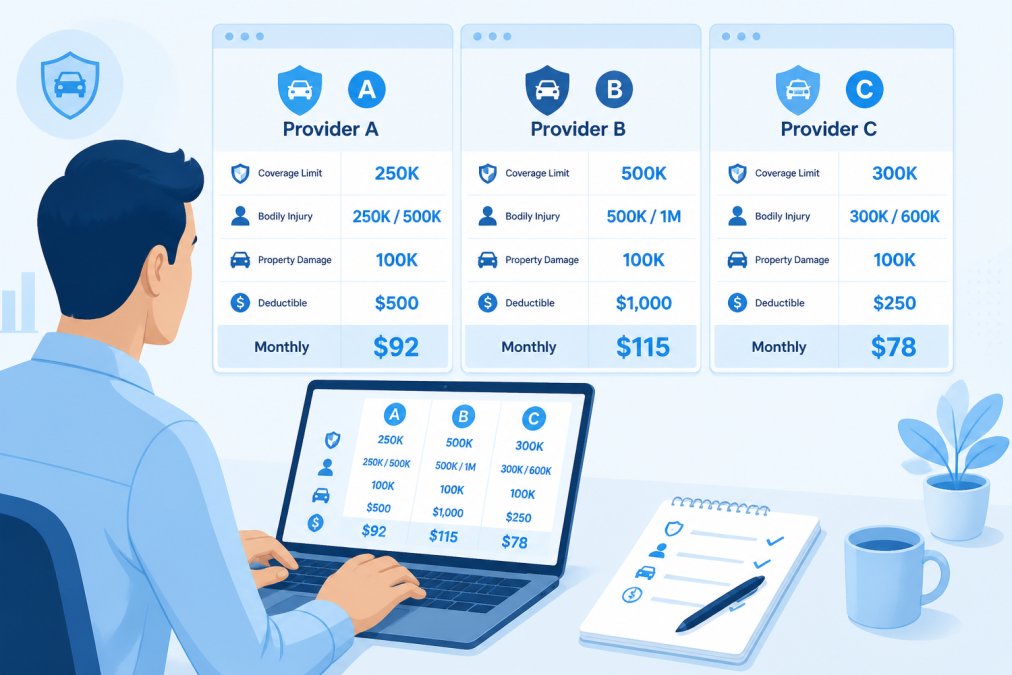
As you review quotes, pay attention to coverage limits and deductibles, these are the levers that control your premium. Coverage limits define the maximum amount your insurer will pay for a claim. Deductibles are what you pay out of pocket before insurance kicks in. A higher deductible lowers your monthly premium but increases your financial responsibility if you file a claim. A lower deductible means higher premiums but less out-of-pocket cost when something happens.
When comparing options, resist the urge to simply pick the cheapest quote. The lowest price often reflects lower coverage limits or higher deductibles. Instead, compare apples to apples: look at identical coverage levels across all quotes. If one quote is significantly cheaper than others, ask why. Is the deductible higher? Are the liability limits lower? Understanding the reason prevents nasty surprises later.
Many insurers offer multi-policy discounts when you bundle home, auto, and life insurance. If you're considering switching insurance providers, ask each company about bundling opportunities. A bundled package might cost less than your current separate policies. Osime Insurance Agency, Inc offers tailored coverage across multiple insurance types, which often reveals savings you wouldn't find shopping for each policy individually.
Document the quotes you receive in a spreadsheet or simple table. List the insurer name, total annual premium, coverage limits, deductibles, and any special features or discounts. This visual comparison makes the decision clearer. Don't rush this step, a few hours of research now prevents months of regret later.
How to Cancel Your Current Insurance Policy
Once you've selected a new insurer and your new policy is active, it's time to formally cancel your current policy. Most insurers require a written cancellation request, though some allow cancellation by phone. Check your policy documents or call your agent to learn your insurer's specific cancellation process.
How to cancel current insurance policy requires understanding your options. You can request cancellation effective on a specific date, typically your renewal date or the date your new policy activates. Never cancel your old policy before your new coverage is in place. A gap in coverage creates serious problems: you're uninsured during that period, and many insurers won't backdate coverage to fill gaps.
When you submit your cancellation request, do so in writing if possible. Email or a formal letter creates a paper trail. Include your policy number, the requested cancellation date, and your signature. Ask for written confirmation that your cancellation was processed. Some insurers send this automatically; others require you to request it.
Understand that cancellation fees may apply depending on your policy and state regulations. Some states cap cancellation fees or prohibit them entirely. Others allow insurers to charge a small administrative fee. A few states permit pro-rated refunds only, meaning you receive money back only if you've overpaid your premium. Ask your current insurer about their specific cancellation policy before you submit your request.
Your cancellation request should be submitted at least 10-14 days before your desired cancellation date. This timing allows the insurer to process your request and send confirmation. If you're canceling mid-term, ask about the pro-rated refund calculation. You're entitled to a refund for any premium you've paid but not used. The calculation depends on your policy's terms and your state's regulations.
Switching Insurance Without a Lapse in Coverage
Switching insurance without a lapse in coverage requires precise timing and coordination. A lapse, even a single day without active coverage, can have serious consequences. If you're involved in an accident or incident while uninsured, you face liability exposure and potential legal problems. Some states require proof of continuous coverage, and gaps can trigger penalties or license suspension.
The safest approach is to ensure your new policy's effective date matches or precedes your old policy's cancellation date. Most insurers allow you to choose your policy's effective date within a reasonable window. Select a date that aligns with your current policy's expiration or renewal date. This synchronization means your new coverage activates the moment your old coverage ends.
If you're switching mid-term, coordinate more carefully. Request that your new policy become effective on a specific date, the same date you're canceling your old policy. Call your new insurer to confirm the effective date in writing. Then submit your cancellation request to your current insurer, specifying the same date. This overlap prevention strategy eliminates the risk of a coverage gap.
Some insurers offer a grace period, a short window after your policy expires during which you're still technically covered. Don't rely on grace periods for coverage. They're designed for situations where renewal payments are delayed, not for intentional cancellations. Treat grace periods as a safety net, not a strategy.
Digital-first cancellation workflows make this process easier. Many modern insurers allow you to manage cancellations through their website or mobile app, with instant confirmation. This removes delays that might occur with phone or mail-based requests. If your current insurer offers digital cancellation, use it for speed and documentation.
Activate Your New Policy and Confirm Effective Date
After you've completed the application process with your new insurer, you'll receive your policy documents and proof of insurance. Review these documents carefully before your policy activates. Check that all your information is correct: your name, address, vehicle details, home information, or business details. Errors at this stage can complicate claims later.
Your proof of insurance is critical. This document proves you have active coverage and is required by law for auto insurance. Some states require proof of insurance when you register your vehicle or renew your license. Keep a digital copy on your phone and a physical copy in your vehicle or at home. Your insurer typically sends this automatically, but you can request it if needed.
Confirm your policy's effective date with your insurer in writing. This is the date your coverage begins. If your new policy is supposed to activate on the same day your old policy expires, verify this explicitly. A simple email confirming "My new policy #[number] is effective on [date]" creates documentation that protects you if questions arise later.
Set up automatic payments for your new policy if you haven't already. This prevents accidental lapses due to missed payments. Most insurers offer discounts for automatic payment, typically 5-10% off your annual premium. This small step saves money and ensures uninterrupted coverage.
After your new policy is active, wait a few days before canceling your old policy. This buffer ensures your new coverage is genuinely in place. If your new insurer discovers any issues during underwriting, you'll still have your old policy as backup. Once you're confident your new coverage is solid, submit your cancellation request to your old insurer.
Common Mistakes to Avoid When Switching Providers
Switching insurance providers is straightforward when you avoid common pitfalls. The most dangerous mistake is canceling your old policy before your new one is active. This creates an uninsured gap that exposes you to serious liability. Never make this move, regardless of how eager you are to switch.
Another frequent error is providing inconsistent information to different insurers. When you request quotes, use identical details for each company. If you describe your home differently to one insurer than another, your quotes won't be comparable. Inconsistency can also trigger underwriting questions that delay your new policy's activation.
Many people underestimate the importance of reviewing their new policy documents. They assume the new policy matches the quotes they received, then discover coverage differences after the policy is active. Read your declarations page thoroughly. Verify that your coverage limits, deductibles, and special endorsements match what you agreed to.
Failing to document cancellation is another common mistake. Submit your cancellation request in writing and request written confirmation. Verbal cancellations over the phone are easy to dispute later. Without documentation, you might discover your old policy is still active and billing you months after you thought you'd canceled it.
People also frequently overlook pro-rated refunds. When you cancel mid-term, you're entitled to a refund for unused premium. However, you have to claim it, insurers don't automatically send refunds. Track your refund status and follow up if it doesn't arrive within the expected timeframe. Some states have specific regulations about refund timelines, so know your state's rules.
Switching to a new insurer without shopping around thoroughly is a missed opportunity. Many people switch once and stay with their new insurer for years without comparing rates again. Insurance markets change constantly. Revisit your coverage and rates annually or every two years to ensure you're still getting the best value.
Switching insurance providers doesn't have to be stressful when you approach it strategically. The key is planning ahead, gathering your documents, comparing options carefully, and timing your cancellation to avoid coverage gaps. At Osime Insurance Agency, Inc, our specialists understand that every client's situation is unique. We work with you to find coverage tailored to your specific needs at rates that fit your budget. Whether you're switching from another provider or securing coverage for the first time, our team is here to guide you through every step. Get your free quote today and discover how personalized service and transparent pricing can make a real difference in your insurance experience.
Frequently Asked Questions
Will switching insurance providers affect my credit score?
Switching auto insurance providers may trigger a soft credit inquiry, which does not affect your credit score. However, some insurers perform hard credit pulls during underwriting. The impact is minimal and temporary. Multiple insurance quotes within a short window (typically 14-45 days) count as a single inquiry, so shopping around for the best auto insurance quote does not harm your credit.
How do I avoid a coverage gap when switching insurance providers?
Purchase your new policy before canceling the old one. Confirm the effective date of your new coverage aligns with or precedes your current policy's cancellation date. Never let a day pass without active coverage. If switching mid-term, coordinate the cancellation notice timing carefully. Request a pro-rated refund from your previous insurer to recover unused premium for the period after your new policy begins.
What documents do I need to switch insurance providers?
Gather your current declarations page, proof of insurance, driver's license or ID, vehicle identification number (VIN) for auto insurance, and any recent claims history. For home insurance, have your property address and details about the home's age and condition ready. If switching commercial insurance, bring business tax returns and risk assessment documentation. Your new insurance agent can request specific underwriting documents as needed.
Do I get penalized for switching insurance companies?
Most policies include a cancellation fee only if you cancel before your policy term ends, though many states cap these fees. If you cancel at renewal, no fee applies. Some insurers waive cancellation fees entirely. Shop around and compare quotes, switching to a lower-cost or better-coverage provider typically saves money and avoids long-term overpayment. Timing your switch at renewal eliminates most financial penalties.
This article was written using GrandRanker