 comparison
Is Commercial Property Insurance Worth It for Home Offices?
Table of Contents
- What Commercial Property Insurance Covers for a Home Office
- Homeowners Insurance Business Equipment Coverage: What's Actually Protected
- Business Property Endorsement vs Commercial Policy: Which Fits Your Home Office?
- Business Owner's Policy for Home Office: Bundling Property and Liability
- Side Hustle vs Full-Time Business: When Coverage Needs Change
- Risks Commercial Property Insurance for Home Offices Doesn't Cover
- How to Decide If Commercial Property Insurance Is Worth It
- Frequently Asked Questions
Last Updated: September 16, 2026
What Commercial Property Insurance Covers for a Home Office
Commercial property insurance for a home office is a policy that protects business-owned physical assets, equipment, and inventory against damage or theft, separate from your personal homeowners coverage. The question of is commercial property insurance worth it for home offices starts with understanding what your existing policy already handles.
A standard commercial property policy covers:
- Business personal property, including computers, monitors, printers, and specialized equipment
- Furniture and fixtures used for business operations
- Inventory stored at your home
- Physical damage from perils like fire, storms, and vandalism
- Business interruption coverage that replaces lost income if a covered loss forces you to pause operations
Homeowners Insurance Business Equipment Coverage: What's Actually Protected
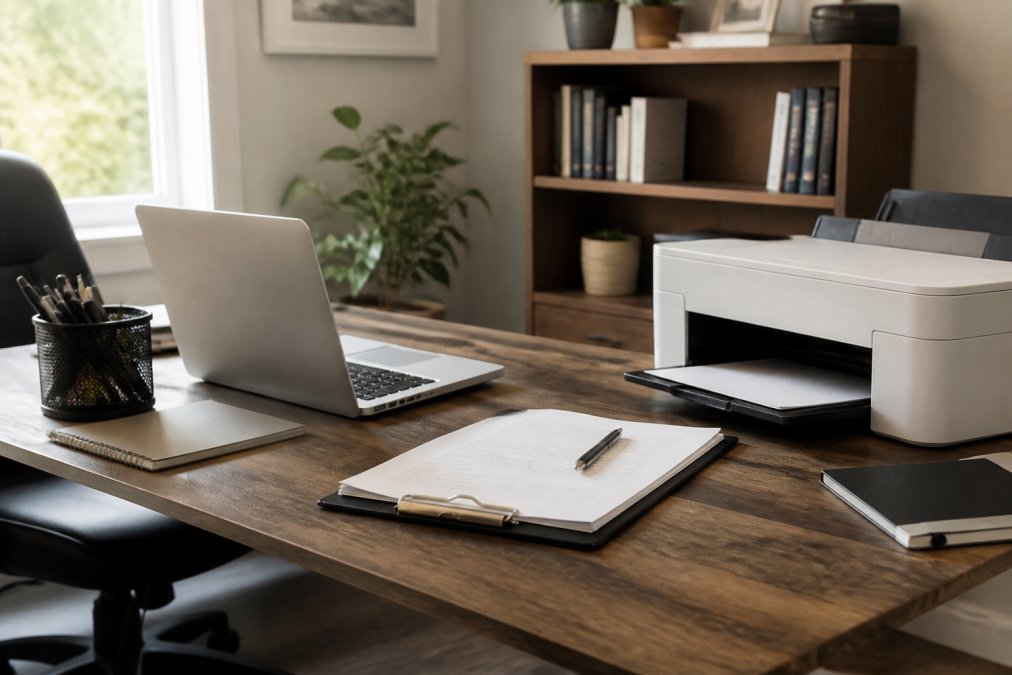
Homeowners insurance business equipment coverage is usually limited to a small sub-limit for business property kept at home. A typical homeowners policy treats business equipment as a secondary category, which means a home-based business with significant assets can find itself underinsured without realizing it.
What most homeowners policies do cover:
- Personal electronics used occasionally for work, like a personal laptop
- A limited dollar amount of business property, often far below replacement cost
- Liability for guests injured on your property, with business-related exclusions
What they typically exclude:
- Business inventory and stock
- Client visitors to a home-based business
- Professional liability and errors and omissions
- Business interruption income replacement
Business Property Endorsement vs Commercial Policy: Which Fits Your Home Office?
A business property endorsement is an add-on to your existing homeowners policy that extends coverage to business equipment. A commercial policy is a standalone contract that covers business property, liability, and income loss together. The right choice depends on the scale of your operations, and on how much of your income depends on the assets sitting in your spare room.
How a business property endorsement actually works
An endorsement, sometimes called a rider, is a written amendment to your homeowners policy. You ask your agent to add it, the insurer prices the added risk, and the endorsement either raises your business property sub-limit or schedules specific items at a stated value. A few mechanics matter:
- It attaches to your homeowners policy, not to your business. If you switch homeowners carriers, the endorsement does not travel with you automatically.
- It usually covers named perils, not all risks. Fire, theft, and windstorm are common; accidental damage or mysterious disappearance often are not.
- It rarely includes liability for business activities. A client who trips in your home office is generally still excluded unless you add a separate business liability endorsement.
- Inventory is the frequent gap. Endorsements are typically written for equipment and furniture, not for stock waiting to ship.
Where the two options diverge
| Feature | Business Property Endorsement | Standalone Commercial Policy |
|---|---|---|
| Best for | Side hustles, low-value equipment, no client visits | Full-time businesses, inventory, client visits, contracts |
| Coverage scope | Business equipment and furniture only | Property, general liability, business interruption |
| Liability for client visitors | Usually excluded | Included |
| Inventory coverage | Rarely included | Available, often as scheduled property |
| Business income loss | Not included | Included |
| Underwriting | Simple add-on to existing policy | Separate application, inspection, and rating |
| Portability | Tied to your homeowners policy | Follows the business |
The middle-ground strategy most articles skip
For a freelancer with a laptop, a desk, and no visitors, an endorsement often closes the gap for a modest added premium. For a business storing inventory, hosting clients, or carrying contractual insurance requirements, a commercial policy or a BOP is the more honest fit, and the endorsement is best treated as a stopgap, not a destination.
Business Owner's Policy for Home Office: Bundling Property and Liability
A business owner's policy (BOP) bundles commercial property coverage with general liability in a single package, and it is often the most cost-effective option for home-based businesses that have outgrown a simple endorsement. Insurers design BOPs for small, low-risk operations, which describes many home offices.
A BOP typically includes:
- Commercial property coverage for equipment, furniture, and inventory
- General liability for bodily injury and property damage claims
- Business interruption coverage for lost income during a covered shutdown
Side Hustle vs Full-Time Business: When Coverage Needs Change
The side hustle versus full-time distinction is the single biggest factor in whether commercial property insurance is worth it for home offices. A weekend craft shop and a full-time consulting practice carry very different risk profiles, even if both operate from the same spare bedroom. The reason is not just revenue; it is how the activity is classified, and classification drives both tax treatment and insurance eligibility.
The threshold is not a dollar figure, it is a pattern
There is no single revenue number that converts a hobby into a business. The IRS looks at whether you operate with continuity, regularity, and a profit motive, factors such as whether you keep separate books, whether you depend on the income, and whether you hold yourself out as a business. Insurers apply a similar logic: they ask whether the activity is incidental to your household or whether it is a distinct commercial operation.
Three stages, three coverage answers
Stage 1, Incidental hobby. Occasional sales, no separate business bank account, no client visits, equipment that doubles as personal property. A homeowners policy with a modest business property sub-limit is usually adequate. Commercial coverage is hard to justify on cost alone.
Signs you have crossed into Stage 3
- Your business generates a meaningful share of your household income
- You store inventory, raw materials, or specialized equipment at home
- Clients or customers visit your home
- You hold a professional license or carry contractual insurance requirements
- You have employees or contractors working from your space
- You maintain separate business books, a business bank account, or a registered entity
This is the point where a standalone policy or BOP starts to make financial sense, and where the cost of coverage is best measured against the cost of rebuilding, not against the premium alone.
Risks Commercial Property Insurance for Home Offices Doesn't Cover
Commercial property insurance is not a catch-all. Knowing what it excludes prevents the unpleasant surprise of a denied claim.
Common gaps:
- Cyber liability: A home office storing client data, payment information, or health records needs separate cyber coverage. A property policy does not respond to a data breach.
- Professional liability: Errors and omissions coverage is separate. Property insurance pays for damaged equipment, not for a client claim that your advice caused a financial loss.
- Workers' compensation: Required in most states once you have employees, and never included in a property policy.
- Vehicle use: A business vehicle used for deliveries or client visits needs commercial auto coverage.
- Flood and earthquake: Standard property policies exclude these perils. Separate coverage is required.
How to Decide If Commercial Property Insurance Is Worth It
Is commercial property insurance worth it for home offices? Run this quick assessment before you decide:
- Add up the replacement cost of all business equipment, furniture, and inventory
- Check your homeowners policy's business property sub-limit
- Count how often clients or customers visit your home
- Confirm whether you store client data or handle payments
- Review any contractual insurance requirements from clients or platforms
- Estimate how long you could operate if a fire or theft wiped out your equipment
Insurance Information Institute guide to business insurance
Frequently Asked Questions
What does commercial property insurance not cover?
Commercial property insurance typically excludes damage from floods, earthquakes, and normal wear and tear. It also doesn't cover employee theft or cyberattacks unless you add endorsements. For home offices, liability for client injuries or professional mistakes usually requires separate coverage. Review your policy limits and exclusions carefully to avoid gaps.
Does a standard homeowners insurance policy cover business equipment?
Standard homeowners policies usually provide limited coverage for business equipment, often capped at $2,500. If your home office has computers, printers, or inventory worth more, you'll need a business property endorsement or a commercial policy. Check your homeowners insurance business equipment coverage limits to see if they match your assets.
What is the difference between a business owner's policy (BOP) and commercial property insurance?
A business owner's policy bundles commercial property insurance with general liability, often at a lower combined premium. Commercial property insurance alone covers only physical assets like equipment and inventory. For home offices, a BOP may be more cost-effective if you also need liability protection for client visits or business operations.
Can I deduct commercial property insurance premiums for my home office?
If you qualify for the home office deduction, you can typically deduct a portion of your commercial property insurance premiums as a business expense. The deductible amount is based on the percentage of your home used exclusively for business. Consult a tax professional to confirm eligibility and calculate the correct deduction.
How does the 80% coinsurance rule affect home office claims?
The 80% coinsurance rule requires you to insure your property for at least 80% of its replacement cost. If you're underinsured, your claim payout may be reduced proportionally. For example, if you carry only 60% of the required coverage, you might receive just 75% of your claim. Review your policy limits annually to avoid penalties.