 ultimate-guide
Is Life Insurance Worth the Cost in 2026?
Table of Contents
- What Is Life Insurance and How Does It Work?
- Term vs. Whole Life Insurance: Which Offers Better Value?
- How Much Life Insurance Do You Actually Need?
- Average Cost of Life Insurance by Age and Health
- Is Life Insurance Worth the Cost for Your Situation?
- The Real Cost of Not Having Life Insurance
- Making Your Decision: A Practical Framework
- Conclusion
Last Updated: August 13, 2026
What Is Life Insurance and How Does It Work?
Life insurance is a contract between you and an insurance company where you pay regular premiums in exchange for a death benefit paid to your beneficiaries when you pass away. The insurer pools premiums from many policyholders to cover the death benefits of those who die during the policy term. This pooling mechanism allows individuals to transfer financial risk to the insurance company, protecting their dependents from the economic consequences of their death.
When you apply for life insurance, the company evaluates your health, age, occupation, and lifestyle through a process called underwriting. This assessment determines your insurability and the premium you'll pay. Younger, healthier applicants typically qualify for lower premiums because they represent less actuarial risk to the insurer. Once approved and your policy is active, your beneficiaries receive the tax-free payout if you die during the coverage period.
Life insurance serves as a financial safety net by replacing lost income, covering final expenses like funeral costs, paying off outstanding debts, and providing estate planning protection. The death benefit can ensure your dependents maintain their standard of living, pay the mortgage, or fund a child's education. At Osime Insurance Agency, Inc, we help families understand how life insurance fits into their broader financial security strategy, ensuring they choose coverage that matches their actual financial obligations and goals.
Term vs. Whole Life Insurance: Which Offers Better Value?
The two main types of life insurance differ fundamentally in structure, cost, and what you receive for your premiums. Term life insurance provides coverage for a specific period, typically 10, 20, or 30 years, and pays a death benefit only if you die during that term. If you outlive the term, the policy expires with no payout and no cash value accumulated. Term policies are straightforward: you pay affordable premiums for pure death benefit protection.
Whole life insurance, by contrast, covers you for your entire lifetime and builds cash value over time. A portion of each premium goes into a cash account that grows tax-deferred and can be borrowed against or surrendered for its surrender value. This flexibility comes at a cost, whole life premiums are typically 5 to 15 times higher than comparable term coverage. The cash value component makes whole life more complex and expensive, but it provides permanent coverage and a savings element.
For most people evaluating whether life insurance is worth the cost, term life insurance delivers better value. You get substantial death benefit protection at a fraction of the cost of whole life, allowing you to cover your financial obligations during your highest-risk years, when dependents rely on your income and you carry significant debt. If your primary goal is income replacement and final expense coverage, term insurance accomplishes this efficiently. Whole life makes sense primarily for those with substantial estates, complex tax situations, or a genuine need for permanent coverage and cash value accumulation. The key question isn't which type is objectively "better," but which aligns with your financial goals and budget constraints.
How Much Life Insurance Do You Actually Need?
Determining the right coverage amount requires calculating your total financial obligations and income replacement needs. A common approach is the income replacement method: multiply your annual income by the number of years your dependents would need support, typically 5 to 10 years. This calculation assumes your beneficiaries could invest the death benefit and live off the returns while adjusting to life without your income.
A more comprehensive approach accounts for specific financial needs: outstanding mortgage balance, car loans, credit card debt, funeral and final expenses (typically $10,000 to $15,000), college funding for children, and the number of years until retirement when Social Security or other income sources kick in. Add these figures together to determine your coverage target.
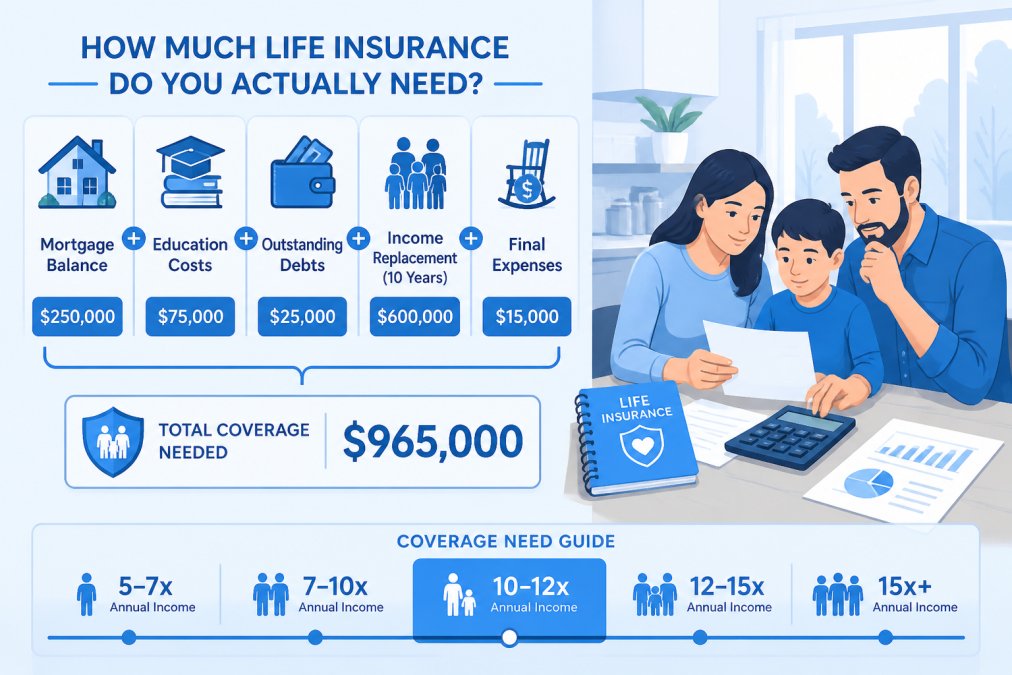
Most financial advisors recommend carrying coverage equal to 8 to 10 times your annual income, though this varies significantly based on your situation. A single person with no dependents might need minimal coverage, just enough for funeral costs and outstanding debts. A parent with young children and a mortgage needs substantially more. Your coverage amount should decline over time as you pay off debt and build retirement savings, which is why term insurance aligns well with this decreasing need.
The mistake many people make is buying too little coverage to save on premiums, then facing inadequate protection when it matters most. Conversely, some overestimate their needs and pay for unnecessary coverage. Working with an experienced insurance specialist helps you calculate a realistic figure that protects your family without waste. At Osime Insurance Agency, Inc, our specialists guide you through this calculation, ensuring your coverage matches your actual financial obligations and family circumstances.
Average Cost of Life Insurance by Age and Health
Life insurance premiums depend primarily on your age, health status, and the coverage amount you select. Younger applicants pay significantly less because they have lower mortality risk. A healthy 30-year-old might qualify for a 20-year term policy at a much lower monthly cost than a 50-year-old with the same coverage amount. Smoking status, medical conditions, family health history, and occupation all influence your final premium through the underwriting process.
Health plays a decisive role in insurability and pricing. Someone in excellent health with no chronic conditions qualifies for preferred rates. A person with controlled diabetes or high blood pressure might pay standard rates. Pre-existing conditions like heart disease or cancer significantly increase premiums or may result in coverage denial. This underscores the importance of applying for life insurance while you're young and healthy, waiting until health problems develop can make coverage unaffordable or unavailable.
Your actual premium depends on the specific death benefit amount, policy term length, and your personal health profile. Rather than stating ranges that may not apply to your situation, we recommend getting a personalized quote from Osime Insurance Agency, Inc, where our specialists can provide accurate pricing based on your age, health, and coverage needs. Premium affordability varies dramatically between individuals, making generic cost estimates less useful than a direct assessment of your specific case.
Is Life Insurance Worth the Cost for Your Situation?
Whether life insurance is worth the cost depends entirely on your financial obligations and who depends on your income. The financial value proposition is clearest when you have dependents, outstanding debts, or income that others rely on. If your death would create genuine financial hardship for your family, life insurance is worth the cost because it prevents that hardship at a relatively affordable price.
When Life Insurance Delivers Clear Financial Value
Life insurance is unquestionably worth the cost when you're the primary income earner supporting a spouse, children, or aging parents. The death benefit replaces lost income and prevents your family from losing their home, disrupting children's education, or facing financial crisis. Young parents with mortgages and childcare costs benefit enormously from affordable term coverage, the premiums are low, the protection is substantial, and the financial consequences of your death without coverage are severe.
Life insurance also delivers clear value when you carry significant debt. A mortgage, car loans, or business debt don't disappear when you die, they become your family's burden. Life insurance proceeds can pay off these obligations, preventing forced asset sales or bankruptcy. Similarly, if you're self-employed or own a business, life insurance protects your business continuity and your family's financial interest in the business.
Business owners often use life insurance for debt consolidation and wealth transfer purposes. A key person insurance policy protects the business if a critical employee dies. Buy-sell agreements funded with life insurance ensure smooth ownership transitions. These applications go beyond personal protection into strategic business planning, where life insurance is clearly worth the investment.
Situations Where Life Insurance May Not Be Necessary
Life insurance becomes unnecessary when you have no dependents, minimal debt, and substantial savings. A single person with no children, no mortgage, and significant retirement savings doesn't need life insurance, they have the financial resources to cover their own final expenses. Similarly, someone who has paid off all debts and accumulated enough wealth that their death wouldn't harm anyone financially may not need coverage.
Retirees with adequate pension income and no dependents often don't need life insurance. Their primary financial obligations have ended, and their income sources don't depend on their continued work. The cost of coverage at advanced age may exceed the actual financial benefit to their estate.
However, some retirees maintain modest coverage for estate planning or to leave an inheritance. This is a personal choice based on values and goals, not financial necessity. The distinction matters: life insurance is worth the cost when it solves a real financial problem. When it's purely optional, you must decide if the benefit justifies the expense.
The Real Cost of Not Having Life Insurance
The cost of inadequate or absent life insurance isn't measured in premiums you pay, it's measured in financial devastation your family faces if you die unexpectedly. Without coverage, your dependents lose your income immediately while facing funeral expenses, outstanding debts, and ongoing living costs. A young family without life insurance might lose their home, withdraw children from school, or face bankruptcy when the primary earner dies.
The opportunity cost of skipping affordable term insurance is substantial. A 35-year-old who delays purchasing coverage for five years will pay higher premiums when they finally apply, and they've gone five years unprotected. If they die during that gap, their family receives nothing. The cost of waiting is both higher premiums and increased risk of dying uninsured.
Policy lapse represents another hidden cost. Some people purchase coverage but stop paying premiums, allowing the policy to lapse. When they die after lapse, beneficiaries receive no benefit despite years of premium payments. This outcome is entirely preventable with proper planning and affordable automatic payments.
The behavioral psychology of "peace of mind" is often dismissed as intangible, but it's genuinely valuable. Knowing your family is protected if something happens to you reduces financial anxiety and allows you to focus on work, relationships, and goals. This psychological benefit has real value that extends beyond the pure financial calculation of death benefit versus premiums.
Making Your Decision: A Practical Framework
Deciding whether life insurance is worth the cost requires honest assessment of three factors: your financial obligations, your dependents' needs, and your budget for premiums. Start by calculating your total financial obligations using the income replacement method or the specific needs approach outlined earlier. Be realistic about how long your family would need income support and what standard of living you want to maintain for them.

Next, compare your coverage need against affordable options. Term life insurance for 20 or 30 years is typically very affordable, especially if you're young and healthy. Get quotes for different coverage amounts and term lengths to see what fits your budget. If you can afford meaningful coverage without financial strain, life insurance is worth the cost. If premiums would create genuine hardship, you might start with lower coverage and increase it as your income grows.
Consider your life stage. Young parents with mortgages and childcare costs almost always benefit from term life insurance. Mid-career professionals with significant debt and dependents should have coverage. Retirees with adequate savings and no dependents likely don't need it. Your situation will evolve, which is why term insurance with the option to convert or renew makes sense, you maintain flexibility as your needs change.
At Osime Insurance Agency, Inc, our specialists help you navigate this decision with personalized guidance. We assess your financial situation, calculate appropriate coverage amounts, and present options that fit your budget. Our commitment to honesty and transparency means you'll understand exactly what you're buying and why it matters for your family's security.
The decision about whether life insurance is worth the cost ultimately comes down to one question: would your death create financial hardship for the people who depend on you? If yes, life insurance is worth the cost. If no, you likely don't need it. The challenge isn't determining whether life insurance has value, it's calculating how much coverage you actually need and finding affordable options that fit your budget. Get a free quote from Osime Insurance Agency, Inc today, and let our experienced specialists help you make an informed decision that protects your family's financial future.
Frequently Asked Questions
Is life insurance worth the cost if I'm young and healthy?
Yes. Younger, healthier individuals typically pay the lowest premiums, making life insurance far more affordable when you start early. Term life insurance for a 30-year-old in good health might cost $20-$40 per month for $500,000 in coverage. The financial safety net you build costs very little at this stage, and locking in rates before age 40 protects you if your health changes later. Even if you never claim the death benefit, the peace of mind and protection for your dependents justifies the modest expense.
What happens if I stop paying life insurance premiums?
If you miss premium payments, your policy lapses, and your coverage ends. With term life insurance, you lose protection immediately. With permanent life insurance, you may have a grace period (typically 30 days) to pay, and some policies build cash value that can cover missed payments temporarily. Once lapsed, reinstating coverage usually requires a new medical exam and underwriting. The key takeaway: life insurance only protects your family if premiums stay current. If affordability is a concern, term insurance offers lower monthly costs than permanent options.
How much does a $500,000 term life insurance policy cost per month?
Monthly premiums depend heavily on age, health, and policy length. A healthy 35-year-old might pay $25-$35 per month for a 20-year term policy with a $500,000 death benefit. At 45, that same coverage could cost $50-$75 per month. Smokers and those with health conditions pay significantly more. Getting a personalized quote reflects your exact risk profile. Term insurance remains one of the most affordable ways to provide income replacement and cover final expenses for your dependents.
Does life insurance provide any benefits while I'm still alive?
Term life insurance does not, it only pays out after death. Permanent life insurance (whole life, universal life) builds cash value over time that you can borrow against or withdraw while living. Some policies include living benefits riders that let you access funds for terminal illness, critical illness, or long-term care. However, these features come with higher premiums. If your primary goal is protecting dependents affordably, term insurance is the better value. If you want a savings component, permanent insurance offers flexibility but at a higher cost.
This article was written using GrandRanker