 how-to
Securing Business Insurance for Hard to Place Risks
Table of Contents
- Why Some Businesses Become Hard to Insure
- The Business Insurance Application Checklist Underwriters Expect
- How to Secure High-Risk Business Insurance Step by Step
- Commercial Insurance Risk Management That Improves Insurability
- Alternative Risk Financing for Businesses Standard Markets Decline
- Renewal Strategy: Lowering Premiums and Keeping Coverage
- Frequently Asked Questions
Last Updated: October 8, 2026
Why Some Businesses Become Hard to Insure
Securing business insurance for hard to place risks starts with understanding why standard carriers walk away: insurers want predictable losses, so an operation that looks unpredictable on paper gets declined before a human reads the file.
At Osime Insurance Agency, Inc, we see this constantly with contractors, trucking companies, and restaurants. The business is fine. The paperwork just scares the underwriter.
Loss History, Claims Frequency, and Risk Exposure
A single large claim rarely kills your chances. A pattern does. Underwriters look at frequency first, severity second: three small slip-and-fall claims over two years signals a housekeeping problem, while one big fire claim signals bad luck.
- Frequency suggests the risk will keep happening
- Severity suggests one bad event could wipe out the policy
- Both together usually means a decline
Missing or incomplete loss runs are the fastest way to get rejected. Request five years of loss history from your current carrier before you shop.
Operations, Occupancy, and Emerging Risks Underwriters Flag
What you do and where you do it matters more than your safety record.
A roofing company working on steep-slope commercial buildings is a different risk than one doing flat residential work. Same trade, different underwriting outcome.
Underwriters also flag emerging risks: cyber exposure, wildfire zones, aging building systems, and subcontractor use. If your operations changed but your application did not mention it, expect questions.
The Business Insurance Application Checklist Underwriters Expect
A complete submission gets quoted; an incomplete one gets declined or ignored. Prepare this before contacting any broker.
- Five years of loss runs from every prior carrier
- Current policy declarations pages and endorsements
- Financial statements or a recent profit-and-loss statement
The last item matters more than most owners realize. Underwriters ask which carriers declined you and why. Hiding a declination is worse than the declination itself.
How to Secure High-Risk Business Insurance Step by Step
High-risk business insurance is coverage placed outside the standard market, usually through surplus-lines carriers that write risks standard insurers avoid. It takes longer and requires more documentation, but follows a clear path from submission to bound policy.
Step 1: Document Your Risk Assessment and Loss Runs
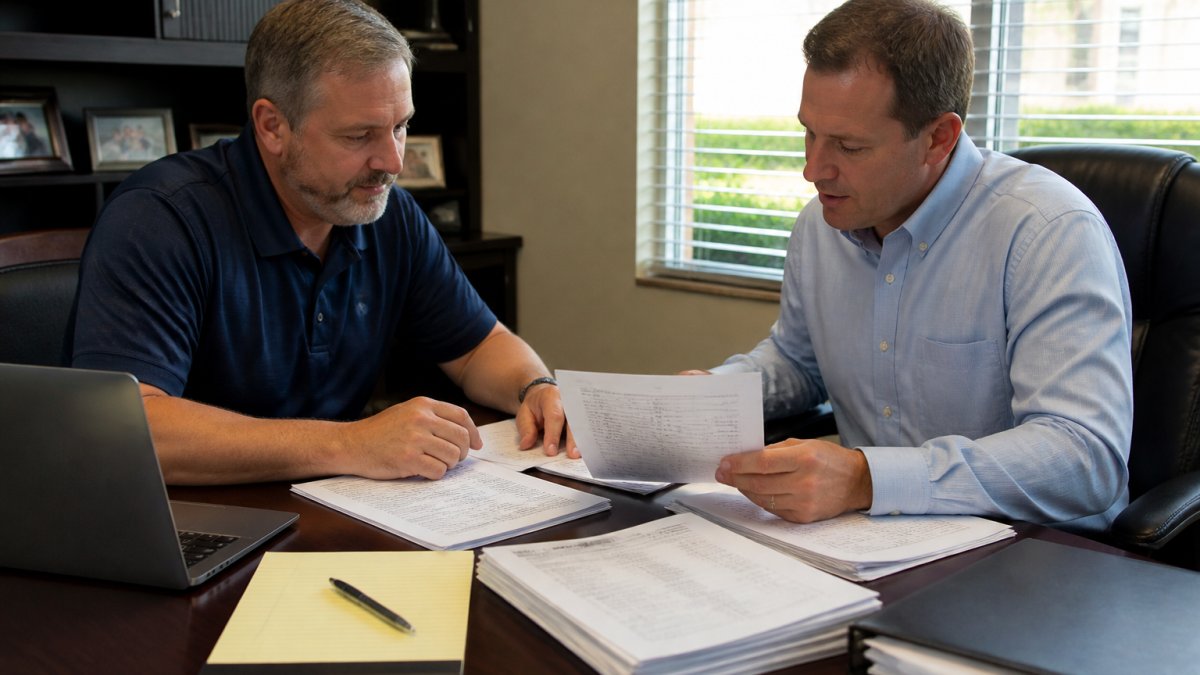
Start with your own numbers: pull five years of loss runs, note every claim, and write a one-page summary of what you changed after each one. Underwriters respond to documented risk management, a written safety program, training logs, and corrective actions all reduce perceived risk. A submission with a narrative ("here is what happened, here is what we fixed, here is the evidence") gets quoted while an identical risk without one gets declined.
Step 2: Understand the Placement Chain Before You Call Anyone
Hard-to-place risks rarely go straight from your business to a surplus-lines carrier. They pass through a chain, and knowing who does what tells you where delays and markups come from.
- Retail broker: The agent or broker you hire. They represent you and owe you a duty of care, but many lack direct access to nonstandard markets.
- Wholesale broker (managing general agent): A middle layer holding appointments with surplus-lines carriers. Retail brokers submit your account to a wholesale broker, who shops it to carriers. Most truly hard-to-place risks need this layer.
- Surplus-lines carrier: The insurer that writes the policy. These carriers are not bound by standard rate filings, so terms and pricing vary widely.
Ask your broker two questions before signing: Are you placing this directly or through a wholesale broker? And which surplus-lines carriers are you appointed with for my class of business?
Step 3: Prepare a Submission Underwriters Will Actually Quote
A complete submission gets quoted. An incomplete one gets declined or ignored. Before your broker approaches any market, assemble:
- Five years of loss runs from every prior carrier
- Current policy declarations pages and endorsements
- Financial statements or a recent profit-and-loss statement
The last item matters more than most owners realize: underwriters ask which carriers declined you and why. Hiding a declination is worse than the declination itself, surplus-lines underwriters talk to each other, and a misrepresentation can give a carrier grounds to rescind coverage later.
Step 4: Compare Nonstandard Policy Terms, Limits, and Exclusions
Nonstandard policies hide their differences in the details. Compare these line by line:
| Term | What to Check | Why It Matters |
|---|---|---|
| Coverage trigger | Occurrence vs. claims-made | Claims-made policies only cover claims filed during the policy period |
| Retroactive date | Date on the claims-made form | Claims from before the retroactive date are excluded, even if filed during the policy period |
| Exclusions | Absolute vs. limited | Absolute exclusions cannot be bought back at any price |
| Limits | Per-occurrence vs. aggregate | A low aggregate caps total annual payouts |
| Deductibles | Per-claim vs. annual aggregate | Aggregate deductibles can stack fast |
| Defense costs | Inside vs. outside limits | Inside limits shrink your payout when legal fees rise |
| Endorsements | Manuscript vs. standard | Manuscript endorsements are custom, read every word |
Read the exclusions page first, that is where coverage gaps live. Then check the retroactive date on any claims-made form: a cheap-looking policy often sets it to the day coverage starts, excluding every prior incident.
Step 5: Bind Coverage and Confirm the Details in Writing
Binding is the moment coverage takes effect. Before you authorize it, confirm in writing:
- The effective date and time, and that there is no gap from your expiring policy
- The named insured matches your legal entity name exactly
- The limits, deductibles, and retentions match what you agreed to
If your broker cannot produce a binder or written confirmation the same day, ask why. Coverage that is "verbally bound" is a dispute waiting to happen.
Commercial Insurance Risk Management That Improves Insurability
Commercial insurance risk management is the ongoing practice of reducing hazards so carriers see you as a better bet at renewal, not a one-time task before you apply, but how you stay insured.
Practical steps that move the needle:
- Create a written safety manual and train employees on it annually
- Document every corrective action after an incident
- Use subcontractor agreements that require certificates of insurance
Carriers reward documented risk management with better terms. Some offer credits for safety programs, even in surplus-lines markets. The OSHA safety and health program guidance offers free frameworks you can adapt for your own manual.
Alternative Risk Financing for Businesses Standard Markets Decline
Alternative risk financing for businesses means covering risk without a traditional policy, or with a much larger retained layer. It suits companies whose losses are predictable but whose class of business is hard to place, usually after a surplus-lines quote comes back with unacceptable terms.
Common options include:
- Captive insurance: Your company forms its own insurer to cover predictable losses, a pure captive (one owner) or a group captive (several similar businesses pool risk). Captives are regulated as insurance companies, require an actuary and a captive manager, and make sense when premiums are large enough that overhead is a small fraction of what you would otherwise pay.
- Parametric insurance: Payout triggers on a measured event, like wind speed or rainfall, rather than a claims adjustment. Useful when losses are correlated with a measurable hazard and you want fast, undisputed payment.
- Large deductibles: You retain more risk in exchange for lower premiums. The deductible is a known, budgeted cost rather than a surprise.
How to Decide Between a Surplus-Lines Policy and an Alternative Structure
Work through these questions in order. If you answer "no" to any, an alternative structure is probably not right yet.
- Are your losses predictable? Alternative financing works when you can reasonably forecast annual claims; if losses swing wildly, you are transferring volatility to your own balance sheet.
- Do you have the cash reserves to absorb a bad year? A captive or large SIR means paying claims out of pocket before any policy responds. If one large loss would strain cash flow, you are not ready.
- Is the premium large enough to justify the overhead? Captives carry setup and ongoing costs, actuarial, legal, captive management, regulatory filings, that can exceed savings on a small premium.
- Do you have the internal capability to handle claims and compliance? An SIR or captive means running a small insurance operation, a real job.
- Have you exhausted the surplus-lines market first? Get at least three nonstandard quotes before considering self-funding, sometimes a surplus-lines carrier will write the risk at a price that beats retaining it.
A Common Pattern: Layer the Structure
Most businesses using alternative risk financing do not replace their policy, they layer it:
- A large deductible or SIR absorbs predictable, frequent losses
- A surplus-lines policy sits above the retention for severe, infrequent losses
- A captive may formalize the retained layer and capture underwriting profit if losses come in under forecast
The decision is rarely "policy or no policy" but "how much risk do I keep, how much do I transfer, and at what attachment point." Your broker, and for larger programs, a captive consultant or actuary, can model the trade-offs.
What to Ask Before You Commit
- What is the total cost of the structure, including setup, ongoing management, taxes, and collateral?
- What happens if losses exceed forecast in year one, can you fund the gap?
- How does the structure interact with your existing surplus-lines policy, and will the carrier agree to the attachment point?
The National Association of Insurance Commissioners captive and risk retention resources publishes guidance on captive regulation and risk retention groups that is worth reviewing before you commit to a structure.
Renewal Strategy: Lowering Premiums and Keeping Coverage
Renewal is where insurability is won or lost. Start 90 to 120 days before your policy expires.
What to do:
- Request updated loss runs early
- Document every safety improvement you made during the year
- Ask your broker to market your account to new carriers
- Review your limits against current replacement costs
- Negotiate deductibles before you negotiate premium
The National Association of Insurance Commissioners consumer resources explains how surplus-lines rules and consumer protections vary by state, which matters when you compare nonstandard quotes.
If your loss history improved, say so in writing. Underwriters respond to a clear story backed by data.
Frequently Asked Questions
What makes a business risk hard to insure?
Insurers flag businesses with frequent liability claims, prior cancellations or nonrenewals, unusual operations, or exposure to emerging risks that standard underwriting models do not price well. A construction contractor with several bodily injury claims, a restaurant with a history of property damage, or a company handling hazardous materials often falls into this category. Underwriters look at loss history, occupancy, revenue mix, and whether your risk exposure fits their appetite. When it does not, the account moves to surplus-lines markets instead of standard carriers.
Can a business get commercial insurance after being declined by a standard insurer?
Yes. A decline from one carrier does not end your options. Specialist brokers place hard-to-place risks with wholesale brokers and surplus-lines markets that write nonstandard risks on their own policy forms. You will typically need a complete business insurance application checklist, including loss runs, financial statements, and a description of your operations. Coverage may cost more and come with tighter policy exclusions, but a properly placed policy still provides financial protection for liability claims and property damage.
How can a business reduce its insurance premiums without cutting coverage?
Focus on commercial insurance risk management before renewal. Document safety training, install loss prevention systems, correct outstanding code violations, and return to work programs for injured employees. Carriers reward accounts that show fewer claims and a written risk management plan. Raising deductibles modestly, tightening coverage limits on lower-risk exposures, and shopping the account through a specialist broker also help. Premium costs depend on your operations, claims history, and the markets willing to write you, so ask your agent for a quote rather than relying on averages.
What is alternative risk financing for businesses that cannot buy standard coverage?
Alternative risk financing moves part of the risk off an insurance carrier and onto the business itself. Options include captive insurance, where a company forms its own insurer to fund expected claims, and parametric insurance, which pays a set amount when a defined trigger occurs rather than adjusting a traditional claim. These structures suit larger operations with predictable losses or risks standard markets will not write. They require actuarial review and legal setup, so work with a specialist broker and a qualified advisor before committing.
Hard-to-place risks are not uninsurable. They just need the right preparation, the right broker, and the right market. Osime Insurance Agency, Inc specializes in commercial coverage for high-risk industries, with personalized service from experienced agents and a commitment to explaining your coverage in plain English. Get your free quote and find out what your business actually qualifies for.