 ultimate-guide
Tips for Buying First Home Insurance: 2026 Guide
Table of Contents
- Understanding Home Insurance Coverage Types
- Replacement Cost vs. Actual Cash Value: Which Matters for First-Time Buyers
- Factors That Affect Home Insurance Rates
- Determining Your Coverage Limits and Deductibles
- How to Bundle Home and Auto Insurance for Better Savings
- Shopping for First Home Insurance: What to Compare
- Filing a Claim as a First-Time Homeowner
- Conclusion
Last Updated: August 24, 2026
Understanding Home Insurance Coverage Types
When you buy your first home, understanding the three core coverage types is essential. Dwelling coverage protects the physical structure of your house, including walls, roof, and built-in appliances. Personal property coverage reimburses you for belongings inside your home, furniture, electronics, clothing, if they're damaged or stolen. Liability protection covers medical expenses and legal costs if someone is injured on your property or if you accidentally damage someone else's property.
These three pillars form the foundation of every homeowner's policy. Without them, a single incident could expose you to catastrophic financial loss. Most lenders require dwelling coverage as a condition of your mortgage, but the other two are equally critical for true financial protection.

Many first-time buyers make the mistake of assuming their homeowner's policy covers everything. It doesn't. Standard policies exclude damage from floods, earthquakes, and certain weather events. You'll need separate endorsements or riders to extend protection into these areas. At Osime Insurance Agency, Inc, we help clients identify coverage gaps before they become expensive problems.
The limits you choose for each coverage type matter enormously. Setting dwelling coverage too low means you won't have enough to rebuild if your home is destroyed. Setting it too high means you're paying unnecessary premiums. The same principle applies to personal property and liability limits, balance protection with affordability.
Replacement Cost vs. Actual Cash Value: Which Matters for First-Time Buyers
The difference between replacement cost and actual cash value is one of the most important distinctions in homeowner's insurance, and it directly affects your payout if you file a claim.
Replacement cost means the insurer pays what it actually costs to rebuild or replace your damaged property at current market prices. If your roof needs replacing and the cost is $15,000 today, replacement cost coverage pays $15,000. Actual cash value (ACV) pays replacement cost minus depreciation. That same $15,000 roof might be valued at $8,000 under ACV because the original roof has aged and lost value.
For dwelling coverage, replacement cost is almost always the better choice. Your home is your largest asset, and ACV payouts often fall short of what you need to actually rebuild. The premium difference is usually modest, but the protection gap is substantial.
Personal property coverage presents a similar choice. Replacement cost coverage for your belongings pays what it costs to replace them new. ACV pays less because it accounts for wear and tear. A five-year-old television worth $800 new might be valued at $300 under ACV, even though you need $800 to buy a replacement.
Here's what first-time buyers often overlook: depreciation rates vary by item type. Electronics depreciate fast. Furniture depreciates slower. Jewelry and collectibles may appreciate. When you're comparing quotes, ask specifically whether the policy uses replacement cost or ACV for each coverage type. The answer directly determines what you'll receive if you need to file a claim.
Factors That Affect Home Insurance Rates
Your premium, the amount you pay for coverage, depends on multiple factors that insurers assess during underwriting. Understanding these helps you anticipate your costs and identify ways to manage them.
Home age and construction materials significantly influence rates. Older homes, particularly those built before 1980, often cost more to insure because they may have outdated electrical systems, plumbing, or roofing. Homes built with fire-resistant materials like brick or concrete cost less to insure than those with wood frames. If you're buying an older home, ask the seller about recent renovations to major systems, that information can lower your quote.
Location and local hazards create major rate differences. Homes in areas prone to hurricanes, earthquakes, wildfires, or flooding carry higher premiums. Even within the same city, a house on a flood plain costs significantly more to insure than one on higher ground. Check flood maps and hazard zones before making an offer on a property.
Your claims history directly affects your rates. If you've filed multiple claims on previous policies, insurers view you as higher risk. First-time homebuyers often benefit from clean claims records, but that advantage disappears quickly if you file claims frequently. This is why deductibles matter, choosing a higher deductible reduces your premium but means you pay more out-of-pocket when you do file.
Home security features lower rates. Deadbolt locks, security systems, smoke detectors, and fire extinguishers reduce your risk profile. Some insurers offer discounts of 5-15% for homes with monitored security systems (naic.org). It's worth installing these before getting quotes.
Credit score influences rates at many insurers, though this varies by state. Insurers use credit-based insurance scores, not your traditional credit score, to assess financial responsibility. Maintaining good credit can reduce your premiums by 10-25% (consumerreports.org).
Determining Your Coverage Limits and Deductibles
Setting the right coverage limits requires honest assessment of what you'd need to recover from different scenarios. For dwelling coverage, the limit should equal the full reconstruction cost of your home, not its market value. A $400,000 house in an expensive market might cost $600,000 to rebuild from scratch due to labor and material costs. Underinsuring creates a gap you'd have to cover yourself.
Personal property limits should reflect the total value of your belongings. Most policies cover 50-70% of your dwelling limit for personal property, but that may not be enough. Walk through your home and estimate replacement costs for furniture, electronics, clothing, and other items. If that total exceeds your policy limit, consider increasing it or adding scheduled personal property coverage for high-value items like jewelry or art.
Liability limits typically start at $100,000 or $300,000. For most first-time buyers, $300,000 is the minimum. If you have significant assets or a swimming pool, consider $500,000 or higher. Liability claims can exceed these amounts, which is why umbrella policies exist, they provide additional liability coverage at relatively low cost.
Your deductible is the amount you pay out-of-pocket before your insurance kicks in. Common deductibles are $500, $1,000, or $2,500. Choosing a higher deductible lowers your premium, but it means larger out-of-pocket costs when you file a claim. First-time buyers often choose $1,000 as a middle ground, it reduces premiums without creating unmanageable claims costs.
Some policies offer percentage-based deductibles for certain perils like wind or hail. A 2% deductible on a $400,000 home means you pay $8,000 before coverage applies. These can add up quickly, so review deductible structures carefully when comparing quotes.
How to Bundle Home and Auto Insurance for Better Savings
Bundling means purchasing multiple insurance policies from the same company, typically home and auto. Insurers offer bundling discounts because it reduces their administrative costs and increases customer loyalty. These discounts typically range from 10-25% depending on the insurer and the policies bundled.
The math is straightforward: if your home insurance costs $1,200 annually and your auto insurance costs $1,000, bundling might save you $200-400 per year combined. Over ten years, that's $2,000-4,000 in savings, substantial money for a first-time homeowner managing mortgage payments.
Beyond the discount, bundling simplifies your life. You have one agent, one billing date, and one place to manage claims. If you need to adjust coverage or file a claim, you're dealing with a single company rather than juggling multiple insurers.
The bundling decision requires comparing total bundled costs against shopping each policy separately. Sometimes an insurer offers an excellent home insurance rate but mediocre auto rates, or vice versa. Calculate your total out-of-pocket cost for bundled policies versus the best individual quotes you've found. If bundling saves money, do it. If not, prioritize the lower individual rates.
Osime Insurance Agency, Inc specializes in bundling solutions that align with first-time homebuyers' needs. Our specialists review both home and auto coverage together to ensure you're not overpaying for either policy while maintaining adequate protection across both.
Shopping for First Home Insurance: What to Compare
When you begin shopping for first home insurance, gather quotes from multiple insurers before deciding. Get at least three quotes with identical coverage limits, deductibles, and endorsements so you're comparing apples to apples.
Beyond price, evaluate the insurer's claims process. How quickly do they respond to claims? Do they have local adjusters or require you to work remotely? What's their online portal like for managing your policy? Read recent customer reviews specifically about claims experiences, that's where you'll learn if an insurer actually delivers on its promises.
Ask about discounts you might qualify for. Bundling, safety features, good credit, loyalty, and completing a home inspection can all reduce your premium. Some insurers offer discounts for completing online safety courses. Every discount compounds, so ask directly rather than assuming you don't qualify.
Compare the endorsements and riders each insurer offers. If you need flood coverage, earthquake coverage, or replacement cost for personal property, confirm the cost and availability before committing. Some insurers make these easy to add; others charge premiums that make them impractical.
Check the insurer's financial stability ratings through AM Best's insurance company ratings. You want an insurer rated A or higher to ensure they can pay claims if disaster strikes. An insurer with a great price but poor financial ratings is a risk you shouldn't take.
During the underwriting process, the insurer may order a home inspection. This is normal and typically free. The inspector checks roof condition, electrical systems, plumbing, heating, and other major components. If issues are found, the insurer may require repairs before issuing a policy or may charge higher premiums. Address any identified problems promptly, it's better to fix them now than discover them during a claims process.
Filing a Claim as a First-Time Homeowner
The claims process feels intimidating if you've never done it, but understanding the steps removes much of the anxiety. Most claims begin with a phone call to your insurer's claims hotline. Have your policy number ready and be prepared to describe the damage clearly.
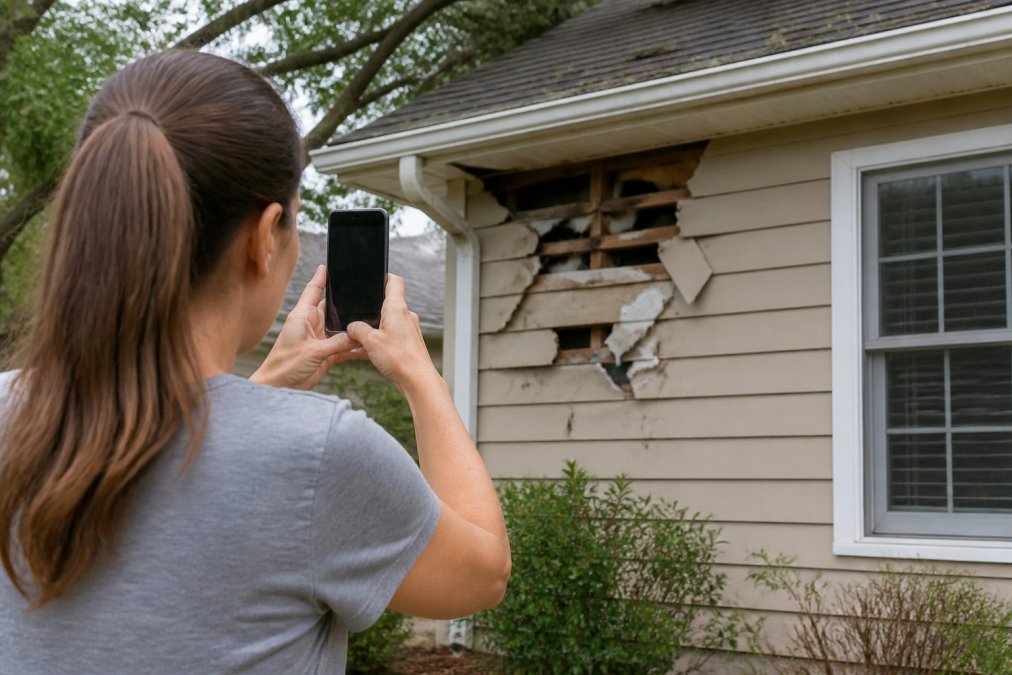
Document everything immediately after damage occurs. Take photos and videos of the damage from multiple angles. Write down the date and time the damage occurred and what caused it. If weather caused damage, note the weather conditions. If theft occurred, file a police report and get the report number. This documentation becomes evidence for your claim.
Your insurer will assign an adjuster to inspect the damage and estimate repair costs. The adjuster's job is to assess the damage fairly and determine what your policy covers. Be present during the inspection and ask questions about anything you don't understand. If you disagree with the adjuster's estimate, you can hire an independent adjuster or public adjuster to review the damage and provide a second opinion.
The claims process timeline varies. Simple claims might be resolved in days. Complex claims involving structural damage or multiple coverage types can take weeks or months. Your insurer is required to acknowledge your claim within a specific timeframe, typically 10-30 days depending on your state, and to provide regular updates.
When your claim is approved, you'll receive payment according to your policy terms. If you have a mortgage, your lender may require that checks be written jointly to you and the lender, ensuring that repair funds are actually used for repairs. This protects both you and the lender's interest in the property.
A common mistake first-time claimants make is accepting the first settlement offer without question. If you believe the insurer's estimate is too low, push back with your own estimates from contractors. Claims adjusters expect negotiation, and providing documentation often results in higher settlements.
Buying your first home is a major financial commitment, and protecting it with the right insurance is equally important. The coverage you choose today determines your financial security if disaster strikes tomorrow. First-time homebuyers often feel overwhelmed by the options, deductibles, and terminology, but breaking the decision into manageable steps, understanding coverage types, comparing quotes, and choosing appropriate limits, makes the process manageable.
The right insurance partner makes all the difference. At Osime Insurance Agency, Inc, we specialize in helping first-time homebuyers navigate these decisions with clarity and confidence. Our specialists explain your options in plain language, help you identify coverage gaps, and ensure you're protected without overpaying. Get your free quote today and discover how personalized guidance transforms insurance from confusing to confident.
Frequently Asked Questions
What should I look for when buying first home insurance?
Focus on four essentials: dwelling coverage that matches your home's reconstruction cost, personal property protection for your belongings, liability coverage to protect against injury claims, and a deductible you can afford. Request quotes from multiple insurers, compare policy exclusions carefully, and ask your agent to explain what's not covered. First-time buyers often overlook endorsements (riders) that add coverage for valuable items like jewelry or electronics. Don't just pick the lowest premium, verify the insurer's claims process and financial stability.
How much home insurance coverage do I actually need?
Your dwelling coverage should equal your home's full reconstruction cost, not its market value. Get a professional appraisal or use your lender's estimate. For personal property, insure 50-70% of your dwelling coverage amount. Liability coverage of $100,000 to $300,000 is standard, though higher limits are wise if you have significant assets. Your mortgage lender will specify minimum requirements. Review these limits annually, especially after renovations or major purchases, to ensure you're not underinsured.
What is the difference between replacement cost and actual cash value?
Replacement cost covers the full expense to rebuild or replace damaged items at current prices. Actual cash value subtracts depreciation, so a 10-year-old roof might be worth much less than a new one. Replacement cost policies cost more but protect you fully after a loss. Actual cash value is cheaper upfront but leaves you responsible for the depreciation gap. For first-time buyers, replacement cost is generally worth the extra premium because it prevents out-of-pocket losses during already stressful claim situations.
When should I start shopping for home insurance during the closing process?
Begin shopping 30-45 days before your closing date. Your lender requires proof of insurance before you receive the deed, so timing matters. Getting quotes early lets you compare options without rushing. Contact multiple agents or insurers, ask about first-time homebuyer discounts, and request quotes for the same coverage levels so comparisons are accurate. Once you've chosen a policy, your agent can bind coverage quickly. Waiting until the last week creates unnecessary stress and may force you to accept less favorable terms.
This article was written using GrandRanker