 How-to
How Does Deck Age Affect Homeowners Insurance?
Last Updated: November 24, 2026
Quick Summary
Deck age affects homeowners insurance because insurers use it as a shortcut for condition, safety, and likely claim frequency, so a newer deck points to sound structure and fewer injury claims while an older deck signals wear and rot. Insurers generally do not publish a single national cutoff, and many request an inspection or proof of recent repairs once a deck passes 20 years.
- Condition usually matters more than the calendar, so a well-kept 20-year-old deck can score better than a neglected 8-year-old one.
- Standard homeowners insurance usually covers sudden accidental deck damage, not gradual decay or rot from years of neglect.
- Liability for deck injuries generally falls under personal liability coverage, and older decks with loose rails raise accident risk.
- Document your deck with dated photos, permits, contractor invoices, and a repair log before your insurer asks about its age.
- A full rebuild with permits and a final inspection gives the strongest documentation and can move the deck into a lower-risk tier.
Table of Contents
- Why Deck Age Is a Line Item in Your Home Insurance Premium
- Deck Age vs. Deck Condition: What Underwriters Weigh More Heavily
- Does Homeowners Insurance Cover Deck Damage?
- Home Insurance Liability for Deck Injuries
- What an Older Deck Insurance Inspection Actually Look For
- Deck Maintenance and Homeowners Insurance: The Discounts and Penalties
- How to Document Your Deck Before Your Insurer Asks
- Repair, Replace, or Disclose: Decisions That Change Your Policy
- Frequently Asked Questions
Why Deck Age Is a Line Item in Your Home Insurance Premium
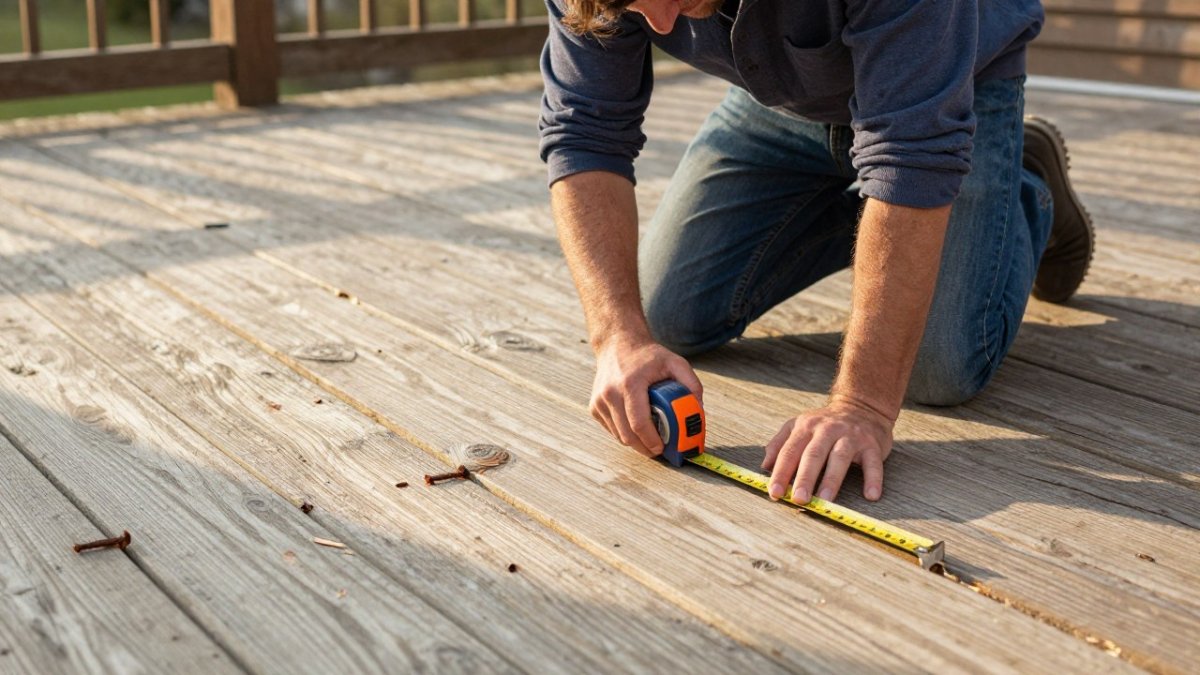
A deck is one of the few parts of a home that sits fully exposed to weather, foot traffic, and time. That exposure is exactly why deck age shows up in how insurers price a homeowners policy. The deck you love is also a risk an underwriter has to measure.
Deck age is the number of years since a deck was built or fully rebuilt. Insurers use it as a shortcut for condition, safety, and likely claim frequency.
Here is the core idea. An insurance premium is a price for risk. A newer deck points to sound structure and fewer injury claims. An older deck points to wear and tear, loose rails, and rot. Insurers generally do not publish a single national cutoff. Instead, they set their own underwriting rules, which is why two neighbors can get different answers.
The thresholds below show the pattern we see most often, not a rulebook every carrier follows.
The Age Thresholds Insurers Actually Use
- 0-10 years: Usually treated as low risk. Most carriers ask little beyond a photo or a quick question.
- 10-20 years: Carriers start asking about material, maintenance, and railing condition.
- 20+ years: Many insurers request an inspection or proof of recent repairs before binding coverage.
- Unknown age: Often treated as the worst case until you can document it.
Watch out: telling an agent "it's about 15 years old" when you are unsure can backfire. A wrong age on an application is a misrepresentation that can complicate a later claim. Check your records first.
Insurers generally do not publish a single national cutoff, but the thresholds below show the pattern seen most often.
| Deck age | How insurers typically treat it |
|---|---|
| 0-10 years | Usually treated as low risk; little beyond a photo or quick question |
| 10-20 years | Carriers start asking about material, maintenance, and railing condition |
| 20+ years | Many insurers request an inspection or proof of recent repairs |
| Unknown age | Often treated as the worst case until documented |
Deck Age vs. Deck Condition: What Underwriters Weigh More Heavily
Condition usually matters more than the calendar. A well-kept 20-year-old cedar deck can score better than a neglected 8-year-old one. Underwriters generally look at both.
Age is a proxy. Condition is the evidence. When an inspector or underwriter can confirm the deck is sound, age becomes a smaller factor.
What carries the most weight:
- Structural soundness: footings, ledger board attachment to the house, and beam connections.
- Railing integrity: height, spacing, and whether posts are firmly anchored.
- Surface condition: rot, soft boards, popped nails, and trip hazards.
- Material: treated wood, composite, and vinyl each age differently.
- Stairs and guards: handrails, treads, and open sides.
A common mistake is assuming a fresh coat of stain resets the clock. It does not. Cosmetic work helps appearance, but underwriters care about structure and safety.
Does Homeowners Insurance Cover Deck Damage?
Standard homeowners insurance usually covers sudden, accidental deck damage, not gradual decay. A tree limb that crashes through the railing is typically a covered peril. Rot from years of neglect is typically not.
Does homeowners insurance cover deck damage? The answer depends on the cause. Sudden events like fire, wind, hail, or a falling object are often covered. Wear and tear, poor upkeep, and age-related deterioration are usually excluded.
A few practical points:
- Coverage for the deck is generally part of the dwelling structure limit, not a separate line.
- An older deck may be subject to a reduced payout if the policy applies depreciation (How is the settlement amount determined?).
- If your deck claim is refused, you have options. Our guide on what to do when your home insurance claim is denied walks through the appeal steps.
The Insurance Information Institute's guide to homeowners coverage explains how dwelling coverage and exclusions typically work.
Home Insurance Liability for Deck Injuries
Liability is the part of deck risk people overlook. If a guest falls through a rotted board or a railing gives way, the injury claim lands on your policy, not just your deck repair budget.
Home insurance liability for deck injuries generally falls under personal liability coverage. That coverage can respond when someone is hurt on your property and you are found responsible, subject to your policy terms and limits.
The link to deck age is direct. Older decks with loose rails and soft boards raise the chance of an accident. A higher chance of a claim can push your premium up or lead a carrier to require repairs.
- Keep railings secure and up to code height.
- Fix soft or cracked boards right away.
- Add lighting on stairs and at the deck edge.
- Warn guests about any uneven surfaces until repaired.
What an Older Deck Insurance Inspection Actually Look For
An older deck may be subject to a visual safety check by an insurer. Inspections generally focus on whether the deck appears sound and notes anything that raises risk.
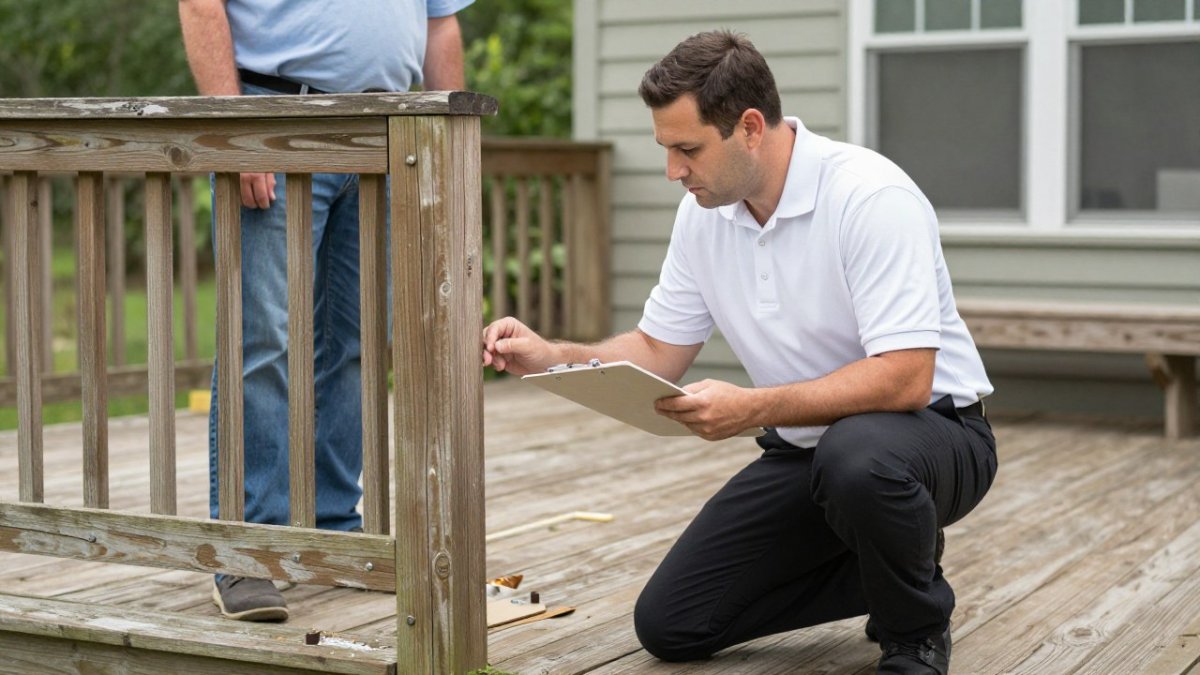
An inspector may check:
- Footings and posts for rot, sinking, or separation from the ground.
- The ledger board where the deck attaches to the house, a frequent failure point.
- Railing height and spacing against current safety standards.
- Board condition for soft spots, splinters, and popped fasteners.
- Stairs and handrails for secure treads and graspable rails.
If you have an inspection coming up, our guide on how to prepare for a home insurance inspection covers the steps that help an older deck pass without stress. The International Residential Code deck provisions set the safety benchmarks many inspectors reference.
Deck Maintenance and Homeowners Insurance: The Discounts and Penalties
Maintenance is one factor you control. Deck maintenance and homeowners insurance can connect through the condition an underwriter can verify, the material's expected service life, and the records you can produce at application or renewal.
Materials age on different curves. Treated lumber typically holds structural integrity for decades if footings and ledger connections stay dry, but surface boards, railings, and fasteners degrade faster.
Maintenance history is evidence, not a story. A carrier cannot see the weekends you spent sealing boards. What it can see is a dated photo set, receipts for sealant and fasteners, contractor invoices, and a repair log.
Where discounts and penalties can show up. Some carriers may offer credits for a recently built or rebuilt deck. Credits and surcharges vary by carrier and by state, so results can differ.
What to do before renewal. Photograph the deck from several sides, note the date, and keep receipts for any boards, rails, fasteners, or sealant you replace.
Watch out: assuming a fresh coat of stain or a new set of railing caps resets the deck's risk profile. Cosmetic work improves appearance, but underwriters respond to structural repairs and documentation, not to a receipt for stain.
It pays to know the full menu of savings. Our rundown of common home insurance discounts shows what to ask about, and our guide on how to qualify for a home insurance loyalty discount covers staying-put savings that can stack with maintenance credits.
How to Document Your Deck Before Your Insurer Asks
Clear records can help when a carrier questions deck age. Build a simple file now, before anyone asks.
Use this checklist:
- Date of original construction or last full rebuild
- Building permits and final inspection records
- Contractor invoices for repairs or replacement
- Photos of the deck from each side, dated
- Receipts for materials and sealant or stain
- A short log of repairs with dates
- Proof of any professional inspection
Store digital copies in one folder. A dated photo set can help show condition at a point in time if a question about deck age arises.
Repair, Replace, or Disclose: Decisions That Change Your Policy
Three choices, three different effects on your policy. The order matters because carriers evaluate a deck through specific underwriting criteria, and the same repair can satisfy one insurer while another still asks for replacement.
What underwriters may consider on a deck. Deck-related underwriting can involve factors such as the age of the structure, the material, the attachment to the house, footing condition, railing height and spacing, stair and guard integrity, and permit history.
Repair may be an option when the frame, footings, and ledger connection are sound and the problems are surface-level: soft boards, loose rails, popped fasteners, or worn stair treads. Fix the safety items first, keep the invoices, and photograph the completed work.
Replace is the better call when the structure is failing, the ledger connection is compromised, or the deck is past its expected service life for its material. Our article on whether a new deck increases homeowners insurance explains how a rebuild can change your premium, including the possibility that a higher replacement cost raises the dwelling limit even as the risk profile improves.
Disclose is not optional. Tell your agent about a rebuild, a major repair, a failed inspection item, or a deck you know is deteriorating. A wrong or incomplete answer on an application can complicate a later claim, and in some cases it can affect coverage.
A practical decision path. If the deck is under 10 years old and appears sound, documenting its condition is a reasonable step. If it is older, consider a professional inspection before renewal and repairing anything it flags. If the ledger or footings are in question, compare the cost of a rebuild against any premium and coverage differences. In every case, consider sharing the outcome with your agent in writing.
One honest limitation: no approach guarantees a lower premium. Carriers set their own rules, and results vary by state and home.
Frequently Asked Questions
Will homeowners insurance cover an old deck?
It depends on the type of loss and the deck's condition. Most policies cover sudden, accidental damage from a covered peril like a falling tree, fire, or windstorm, regardless of deck age. What they typically exclude is damage from rot, rust, insect infestation, or general deterioration, since that is considered maintenance the policyholder is responsible for. Coverage for an older deck depends on the policy terms and the cause of the damage.
At what age does a deck start affecting insurance eligibility?
There is no single national cutoff. Insurers set their own rules, and some may ask about deck age at different points. Carriers may handle older decks differently, and some may request an inspection before writing a policy.
Should I tell my insurer when I replace or renovate my deck?
Yes, it is generally a good idea to inform your insurer. A new deck may affect how the insurer views its age and condition, and it can help confirm that your coverage reflects the structure's value. Tell your agent before or right after the project, and keep the permit, contractor invoice, and photos. If you add features like stairs, a hot tub, or a second-story landing, mention those too, because they change both replacement cost and liability exposure.
Can an unsafe deck affect homeowners insurance coverage?
An unsafe deck raises two separate risks. On the property side, an insurer may restrict coverage, raise the deductible, or decline to renew if an inspection finds structural problems. On the liability side, a collapse or railing failure that injures a guest can lead to a claim under personal liability coverage, and documented neglect can complicate that claim. Repairing known hazards before a loss is the simplest way to protect both your coverage and your finances.