 How-to
How to Document an Insurance Claim Dispute
Last Updated: November 14, 2026
Quick Summary
To document a claim dispute, open one folder before any disagreement and collect proof of coverage, loss, value, and communication. Photograph all damage before cleaning or repairs, and log every call and letter in a dated claim journal. Short, factual dispute letters that cite policy language and attach a numbered evidence log get read and answered.
- Photograph each room wide first, then mid-range, then close-ups with something for scale.
- Write journal entries the same day in plain language and never guess at a date.
- Number exhibits in the order you cite them and lock the numbering before the first letter.
- Send dispute letters by certified mail or the insurer's written portal to prove delivery.
- File complaints with your state insurance regulator only after you have a written decision.
Table of Contents
- Start Your Claim Dispute File Before the Disagreement
- Documents Needed to Dispute an Insurance Claim
- How to Document Property Damage for an Insurance Claim
- Build a Claim Journal and Communication Log
- Insurance Claim Dispute Letter Template That Gets Read
- How to File a Complaint Against an Insurance Company
- Request a Written Explanation and Respond to Partial Denials
- Bring Your Claim File to Osime for a Free Coverage Review
- Frequently Asked Questions
Start Your Claim Dispute File Before the Disagreement
Why the early start? Because memory fades and details vanish. A folder you open on the day of the incident costs you nothing. Rebuilding one three months later costs you time and use.
Here is what to set up now:
- One folder, digital or paper, labeled with the claim number
- A single notebook for a running timeline
- A dedicated email thread for all insurer contact
Keep every document in this file, even ones that seem unimportant. A short voicemail note can matter months later. Below, we walk through exactly what to collect and how to organize it.
Documents Needed to Dispute an Insurance Claim
The documents needed to dispute an insurance claim fall into four groups: proof of coverage, proof of loss, proof of value, and proof of communication. Most policyholders gather the first two and forget the rest. That gap is where disputes stall.
Proof of coverage shows what your policy promised.
Proof of loss shows what happened. That means dated photos, videos, and a written description of the incident.
Proof of value shows what the damaged item was worth. Collect receipts, invoices, repair estimates, and any repair history.
Proof of communication shows what was said and when. Save every email, letter, and adjuster note.
A quick reference:
| Document Group | What to Collect | Why It Matters |
|---|---|---|
| Coverage | Policy, declarations page, endorsements | Proves what was promised |
| Loss | Dated photos, video, incident notes | Proves what happened |
| Value | Receipts, invoices, estimates | Proves what it's worth |
| Communication | Emails, letters, call logs | Proves the timeline |
How to Document Property Damage for an Insurance Claim
Photograph everything before you clean, repair, or throw anything away. That single rule prevents more disputes than any other. Once damaged items leave your home, you cannot prove their pre-loss condition.
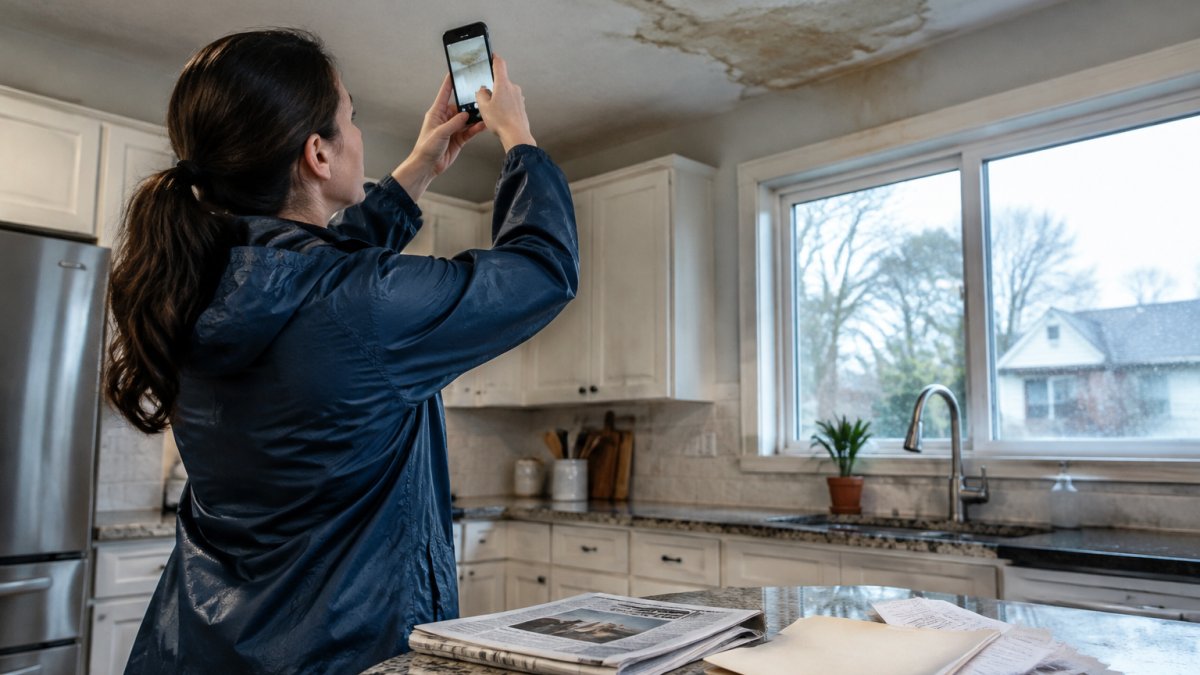
Follow this sequence:
- Shoot wide first. Capture each room from the doorway so the layout is clear.
- Move to mid-range. Photograph the damaged area in context.
- Finish with close-ups. Include something for scale, like a ruler or coin.
- Record short videos. Walk slowly through each room and narrate what you see.
- Note the date and time. Many phones stamp this automatically. Check that yours does.
- Document pre-loss condition. Use older photos from your phone or family albums to show how items looked before.
Keep the original files untouched. If you edit or crop a photo, save a copy and leave the original alone. Digital evidence integrity matters if a dispute escalates.
Build a Claim Journal and Communication Log
A claim journal is a dated record of every event, call, and decision in your claim. It is not a diary. It is evidence.
Your log should capture:
- Date and time of each contact
- Name and title of the person you spoke with
- What was discussed and what was promised
Save written communication the same way. Create one email thread per claim and forward phone summaries to yourself so there is a written record. Keep letters in the folder with the envelope, since postmarks can matter.
If updates stop arriving, our guide on why insurance claim communication delays happen explains the usual causes and how to push back. And when you need to check where things stand, here is how to track your insurance claim status.
Insurance Claim Dispute Letter Template That Gets Read
A dispute letter works when it is short, factual, and specific. Adjusters read dozens a day. Yours should state the problem, cite the policy language, list the evidence, and ask for a clear response. The template below is only half the job. The other half is the evidence packet you attach to it, organized so the adjuster can match each claim to each document without hunting.
Build the evidence log before you write the letter
Open a spreadsheet with one row per item of evidence and these columns: exhibit number, date of the document or photo, what it shows, the disputed issue it supports, and the file name.
A common pattern is a letter that says "see attached photos" with forty unlabeled images. The adjuster cannot tell which photo supports which line item, and the dispute stalls.
Watch out: if you renumber exhibits after sending a letter, your earlier correspondence no longer matches your file.
The letter template
[Your name] [Policy number] | [Claim number] [Date]
Dear [Adjuster name or Claims Department],
I am writing to dispute [the denial / the settlement amount / the liability decision] on claim [number], dated [date of decision].
The decision states [quote the reason briefly]. I believe this is incorrect for the following reasons:
- [Reason, tied to a specific policy section]
- [Reason, tied to evidence in the attached file]
Attached please find: [list each exhibit by number and one-line description, e.g., Exhibit 3, dated photo of kitchen ceiling, 2026-03-14].
Please provide a written response within [reasonable timeframe] confirming receipt and explaining the next step.
Sincerely, [Name] | [Phone] | [Email]
Make the letter easy to answer
Three habits raise the odds of a substantive reply. First, quote the policy language you rely on rather than paraphrasing it, and cite the page or section number. Second, keep the letter to one or two pages and put the exhibit list on its own page. Third, ask one clear question at the end, such as whether the insurer will reconsider a specific line item, so the adjuster has something concrete to respond to.
Send it by a method that creates proof of delivery, such as certified mail with return receipt or the insurer's written-channel portal, and keep the confirmation in your file. If you have not received a written response by the date you named, follow up in writing and reference your original letter and its delivery confirmation.
How to File a Complaint Against an Insurance Company
Filing a complaint starts with your state insurance regulator, not a courtroom. Every state has a department of insurance that accepts consumer complaints, usually online and at no cost. File only after you have a written decision and a documented paper trail, because a regulator will ask for both.
Verify your deadlines first
Deadlines in a claim dispute come from three places, and they do not all run on the same clock. Your policy sets deadlines for submitting a proof of loss, demanding appraisal, or filing suit. Your state sets deadlines and complaint windows through its insurance code and regulator. Court rules set filing deadlines if litigation becomes necessary.
To verify the dates that apply to you, read the policy's duties-after-loss and appraisal sections, then check your state insurance department's consumer complaint page for any stated time limits, and confirm any suit-limitation language in the policy with a licensed professional if the amount is significant.
Watch out: a policy's suit-limitation period can be shorter than you expect and may be tolled or extended by state law. Do not assume the date on the policy is the final word without checking your state's rules.
Choose the escalation path that fits the dispute
Different disputes call for different paths, and choosing the wrong one wastes time you may not have.
- Valuation-only disputes. If you and the insurer agree the loss is covered but disagree on the amount, the appraisal clause in many policies provides a process where each side picks an appraiser and the two appraisers select an umpire. Read the clause for how it is triggered and what it costs.
- Coverage or handling disputes. If the insurer denied coverage or mishandled the claim, a complaint to the state insurance regulator creates a written record and can prompt a review. It does not award damages, but it is free and fast relative to litigation.
- Unresolved disputes of significant value. Mediation, whether voluntary or court-ordered, can narrow the issues. Litigation is the last resort and the most expensive; consult a licensed attorney before that step.
File the complaint
Before you file, confirm you have the insurer's final written position, gather your journal, letters, and evidence log, and write a short summary of the dispute in date order. Then submit the complaint through your state regulator's consumer portal, attach your documents, and keep the confirmation number.
If a complaint stalls or your claim closes, our guide on when to reopen a closed insurance claim covers the timing and steps.
Request a Written Explanation and Respond to Partial Denials
Ask for the denial reason in writing, every time. A phone explanation disappears. A letter you can quote.
When you receive the explanation, compare it line by line with your policy. Look for three things: a cited exclusion, a factual error, and a valuation gap.
Partial denials need a different response than full denials. A partial denial means some items were paid and others were cut. Respond with a line-item breakdown:
- List each denied item
- State the amount you believe is owed
- Attach the receipt, estimate, or photo that supports it
If the partial denial becomes a full denial, our guide on what happens when an insurance claim is denied walks through how the process unfolds.
Bring Your Claim File to Osime for a Free Coverage Review
Documentation is the half of a claim dispute you control.
Osime Insurance Agency, Inc offers home, auto, commercial, and life insurance, and is committed to honesty, integrity, and transparency.
Before you hand your file to anyone, weigh the options. Our guide on whether hiring a public adjuster is worth it for claims explains what that involves.
A dispute you cannot document is a dispute you will likely lose, no matter how valid your position.
Frequently Asked Questions
What should I do if I disagree with an insurance claim decision?
Read the denial or settlement letter closely and note the specific reason and the deadline to respond. Compare the adjuster's findings against your own photos, receipts, and repair estimates. Then send a written claim dispute letter that cites the policy language and attaches the evidence that contradicts the decision. Keep copies of everything and log each contact with the insurer. If the response still falls short, you can escalate to your state insurance regulator or request mediation or appraisal, depending on what your policy allows.
What documents do I need to dispute an insurance claim?
At minimum, gather your policy declarations page, the denial or settlement letter, dated photos and videos of the damage, receipts and invoices for repairs or replacements, contractor estimates, and your claim number and correspondence log. If you have a pre-loss condition record, such as an old inspection or prior photos, include it. Organize everything by date and label each file clearly so the reviewer can follow your timeline without guessing. A one-page cover summary listing what is attached helps the adjuster move faster.
How do I write a letter disputing an insurance claim?
Address it to the adjuster and the claims department, include your name, policy number, and claim number, and state the disputed amount or decision in the first paragraph. Follow with a short timeline of events, the policy language you believe applies, and a numbered list of the evidence attached. Ask for a written response within a specific timeframe. Keep the tone factual, avoid speculation, and send it by a method that gives you proof of delivery. Save a copy in your claim file.
How do I file a complaint against an insurance company?
Start by exhausting the insurer's internal appeal process and keep the written response. Then contact your state insurance department, which typically accepts complaints online or by mail and asks for your policy and claim details plus a summary of the dispute. Attach copies, never originals, of your evidence and correspondence log. The regulator may forward the complaint to the insurer for a formal reply. For disputes over value rather than coverage, ask whether your policy includes an appraisal clause, which can resolve the amount without a lawsuit.