 how-to
How to Lower Home Insurance Costs: 7 Steps
Table of Contents
- Step 1: Shop Around for Competitive Rates
- Step 2: Increase Your Home Insurance Deductible Impact on Premiums
- Step 3: Bundle Home and Auto Insurance for Savings
- Step 4: Install Home Security Systems and Protective Devices
- Step 5: Qualify for Home Improvement Discounts for Insurance
- Step 6: Maintain a Good Credit Score and Review Claims History
- Step 7: Review Policy Limits and Coverage Annually
- Conclusion
Last Updated: August 30, 2026
Step 1: Shop Around for Competitive Rates
Getting multiple quotes is the single most effective way to lower home insurance costs. Insurance companies price risk differently based on their underwriting models and claims history analysis, which means identical coverage can vary significantly from carrier to carrier. A homeowner who accepts the first quote without shopping typically pays 20-30% more than necessary over time (iii.org).
Start by gathering quotes from at least three different insurers. Most companies offer free online quotes that take 10-15 minutes to complete. You'll need basic information about your home: year built, square footage, construction type, roof condition, and any recent updates or renovations. The more accurate your details, the more reliable your quotes become.
When comparing quotes, ensure you're looking at the same coverage limits across all policies. A lower premium might reflect lower liability limits or higher deductibles, not necessarily a better rate. At Osime Insurance Agency, Inc, we help clients understand that the cheapest option isn't always the best option, what matters is finding the right balance between affordability and adequate protection.
Don't just compare the base premium. Ask about available discounts each company offers. Some carriers provide substantial reductions for bundling, safety features, or claims-free histories. These discounts can swing your decision significantly. Request quotes every 2-3 years even if you're satisfied with your current coverage, since rates fluctuate and new discounts emerge regularly.
Many homeowners overlook the importance of checking customer service ratings and claims processing speed. A slightly higher premium from a company known for responsive claims handling can save you stress and money when you actually need to file a claim. Review ratings on independent sites to understand how each carrier performs in real-world situations.
Step 2: Increase Your Home Insurance Deductible Impact on Premiums
Your deductible, the amount you pay out-of-pocket before insurance coverage kicks in, has a direct inverse relationship with your premium. Raising your deductible from $500 to $1,000 typically reduces your annual premium by 10-15% (naic.org). Moving to a $2,500 deductible can lower costs by 25-30% or more, depending on your insurer and location.
The key decision is choosing a deductible you can actually afford to pay. If a major loss occurs, you'll need immediate funds to cover that amount while waiting for your claim settlement. A deductible that's too high creates financial strain; one that's too low defeats the purpose of saving on premiums. Most financial advisors recommend a deductible equal to one month of household expenses or kept in an accessible emergency fund.
Consider your home's risk profile when setting this number. Older homes with aging roofs or plumbing systems might experience more frequent claims, making a lower deductible more practical. Newer homes with updated systems and good maintenance records can often handle higher deductibles comfortably. Your claims history also matters, if you've never filed a claim, you're likely comfortable with higher out-of-pocket responsibility.
Some insurers offer separate deductibles for specific perils like wind or hail. These specialized deductibles might be higher than your standard deductible, and understanding this distinction matters when budgeting for potential losses. Ask your agent to explain all deductible options available on your policy.
The math is straightforward: every dollar you're willing to pay out-of-pocket saves you money on premiums. The question is finding the threshold where you're comfortable with that risk-reward balance. Test different deductible levels with your insurer to see the premium impact before committing to a change.

Step 3: Bundle Home and Auto Insurance for Savings
Bundling home and auto insurance with the same carrier typically generates 15-25% savings on your combined premiums (iii.org). This discount reflects the reduced administrative costs and increased customer loyalty that insurers value. The savings apply to both policies, making bundling one of the most straightforward ways to lower home insurance costs without reducing coverage.
Most major carriers offer bundling discounts automatically when you combine policies, but the discount amount varies. Some companies offer fixed percentage reductions, while others use tiered discounts that increase with additional policies. Adding life insurance or umbrella coverage to your bundle can unlock even larger savings with certain carriers.
The convenience factor matters too. Managing a single agent and one renewal date simplifies your insurance administration. You receive consolidated billing, making it easier to track your total insurance expenses. If you need to file a claim, having everything with one company simplifies the process and reduces confusion about coverage coordination.
Before bundling, verify that the bundled rate actually beats your current individual policies plus any discounts you're receiving. Sometimes a company offers an attractive bundling discount but charges higher base rates that offset the savings. Request a detailed comparison showing your current costs versus the bundled option.
Bundling also gives you negotiating use. Once you've consolidated your policies, you have more standing to request additional discounts or better terms during renewal. Insurers work harder to retain multi-policy customers because losing one policy often means losing all of them.
Step 4: Install Home Security Systems and Protective Devices
Home security systems and protective devices reduce your insurance risk profile, which translates to premium discounts. Insurers offer reductions for deadbolt locks, alarm systems, sprinkler systems, and smoke detectors because these devices demonstrably reduce loss frequency and severity. A monitored alarm system can generate 5-15% discounts depending on your insurer.
The most cost-effective protective devices are often the simplest ones. Smoke detectors and carbon monoxide detectors are inexpensive to install and typically qualify for discounts. Deadbolt locks on all exterior doors cost under $100 per door but signal to insurers that you take security seriously. Many homeowners recover the cost of these devices through insurance savings within the first year.
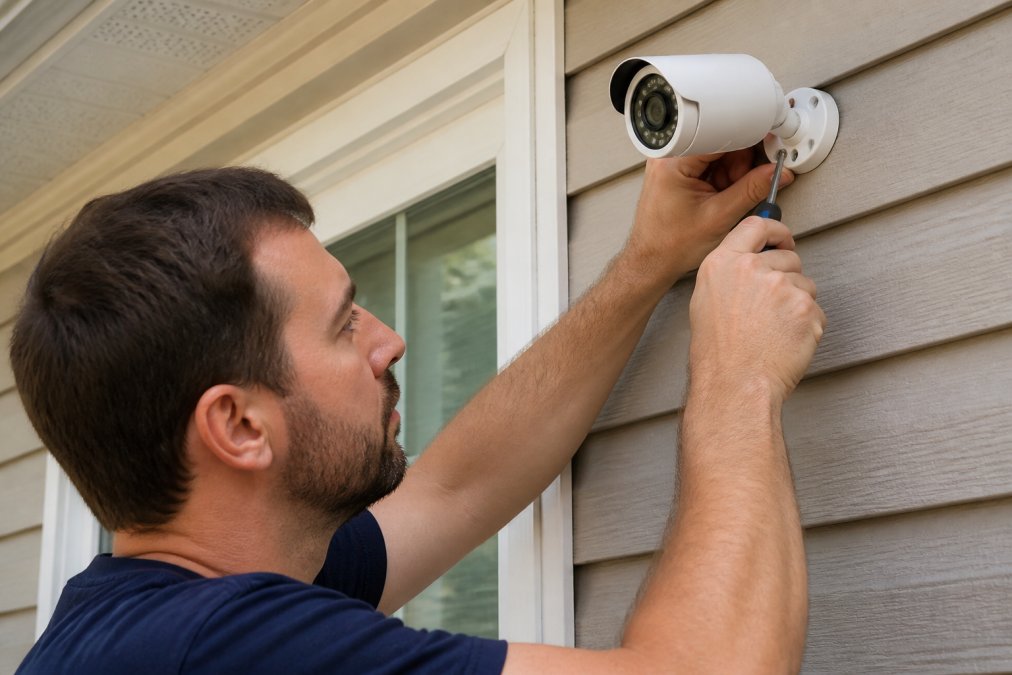
Monitored alarm systems represent a larger investment but offer substantial savings. A professionally monitored system costs $30-50 monthly but can reduce your premium by enough to pay for itself. The key is ensuring your system is professionally monitored, self-monitored systems typically don't qualify for discounts because insurers need verification that someone responds to alerts.
Sprinkler systems in fire-prone areas can reduce premiums significantly. If you live in a region with high wildfire risk, a sprinkler system demonstrates serious loss prevention commitment. The upfront cost is substantial, but the long-term premium savings and increased home protection make it worthwhile for many homeowners.
Document all security and protective devices you've installed. Provide your insurer with proof, photos, receipts, or installation certificates, to ensure you receive the discount. Some insurers require annual verification that systems remain functional and monitored. Keep records of system maintenance to demonstrate ongoing commitment to loss prevention.
Step 5: Qualify for Home Improvement Discounts for Insurance
Recent home improvements can qualify you for insurance discounts because they reduce risk and improve property value. Upgrades to your roof, electrical system, plumbing, HVAC, or foundation all signal that your home is well-maintained and less likely to experience damage. A new roof alone can generate 10-15% savings since roof condition is a major factor in underwriting decisions.
The improvements that matter most are those addressing the most common claims. Roof replacement is the single most valuable improvement for insurance purposes. Electrical system updates reduce fire risk. Plumbing upgrades prevent water damage claims, which are among the most expensive losses insurers cover. Foundation repairs or reinforcement reduce structural damage risk.
Home improvement discounts require documentation. You'll need receipts, permits, or contractor certificates proving the work was completed and meets current building codes. Some insurers require photos of the completed work. Keep this documentation organized and provide it to your agent during renewal or when requesting a rate review.
The timing of improvements matters for your insurance strategy. If you're planning major updates, completing them before renewal gives you immediate premium benefits. If you've recently completed improvements but haven't updated your insurance, contact your agent to ensure you're receiving applicable discounts.
Not all improvements qualify for discounts. Cosmetic updates like painting or landscaping rarely affect your premium. Focus on structural, safety, and system improvements that insurers recognize as risk-reducing. Ask your agent which improvements your specific insurer rewards before investing in upgrades.
Step 6: Maintain a Good Credit Score and Review Claims History
Your credit score influences your insurance premium more than many homeowners realize. Insurers use credit-based insurance scores to assess the likelihood you'll file claims and pay premiums on time. Maintaining good credit, typically a score of 700 or higher, can save 10-20% on your premium. The relationship between credit and claims behavior is well-established in insurance underwriting.
Improving your credit score takes time but delivers lasting benefits beyond insurance savings. Pay bills on time, reduce outstanding debt, and avoid opening unnecessary new credit accounts. These actions benefit your overall financial health while simultaneously lowering your insurance costs.
Your claims history directly impacts your premium and your ability to get coverage. Each claim you file stays on your record for 3-5 years, depending on your state's regulations and your insurer's policies. Multiple claims signal to insurers that you're a higher-risk customer, resulting in higher premiums or potential non-renewal.
This reality creates a difficult choice for homeowners: file small claims or pay out-of-pocket? Generally, filing claims for minor damage costs more in premium increases than paying directly. A $2,000 claim might result in $500-1,000 annual premium increases over several years, totaling far more than the original loss. Reserve claims for significant losses where the damage exceeds your deductible substantially.
Review your claims history annually to ensure accuracy. Request your CLUE report (Comprehensive Loss Underwriting Exchange), which contains your insurance claims history. Insurers use this report when underwriting your policy. Errors on your CLUE report can result in higher premiums or coverage denial. If you find inaccuracies, dispute them with the reporting agency.
At Osime Insurance Agency, Inc, we help clients understand that your claims history is as important as your credit score when it comes to lower home insurance costs. Avoiding unnecessary claims and maintaining a clean record keeps your premiums competitive.
Step 7: Review Policy Limits and Coverage Annually
Annual policy reviews ensure your coverage matches your current needs and that you're not paying for unnecessary protection or leaving gaps in coverage. Many homeowners maintain the same policy limits for years without considering whether those limits still make sense. A home that's been paid down, renovated, or experienced significant appreciation may need higher dwelling coverage limits.
Understanding the difference between replacement cost and actual cash value matters significantly. Replacement cost coverage pays what it actually costs to rebuild your home with new materials at current prices. Actual cash value reduces that payment by depreciation. For most homeowners, replacement cost is the better choice because it ensures you can actually rebuild after a total loss.
Your liability coverage limits should reflect your net worth and potential exposure. If you have significant assets, your current liability limits might be insufficient. A lawsuit resulting from someone injured on your property could exceed your policy limits, putting your assets at risk. Umbrella policies provide additional liability coverage at reasonable cost, typically $150-300 annually for $1 million in additional coverage.
Review your deductible choices during your annual policy review. If your financial situation has improved, you might comfortably increase your deductible further. If you've experienced financial setbacks, reducing your deductible might provide peace of mind. Your deductible should reflect your current ability to handle out-of-pocket losses.
Special coverage items deserve attention too. If you've purchased expensive jewelry, art, or electronics, your standard homeowners policy might not provide adequate coverage. Scheduled personal property endorsements ensure valuable items are properly protected. Without these endorsements, you might face coverage limits that don't reflect the actual value of your possessions.
Policy language changes annually as insurers update their forms. Review your policy documents to understand exactly what's covered and what's excluded. Many homeowners discover coverage gaps only when they file a claim. Understanding your policy before loss occurs prevents unpleasant surprises when you need your insurance most.
Lowering your home insurance costs doesn't mean sacrificing protection, it means being strategic about your coverage and shopping intentionally. The seven steps outlined here work together to reduce your premium while maintaining the protection your home and family deserve. Start with shopping around for competitive rates, then layer in deductible increases, bundling, and protective devices. Review your policy annually to ensure your coverage evolves with your needs.
The right insurance partner makes this process straightforward. Get Your Free Quote from Osime Insurance Agency, Inc today to see how our personalized approach and commitment to transparency can help you find affordable, tailored coverage that actually protects what matters most. Our specialists understand homeowners' insurance inside and out, and we're here to ensure you're not overpaying for the protection you need.
Frequently Asked Questions
Does raising my deductible actually lower my insurance premium?
Yes. Increasing your deductible directly reduces your premium because you're agreeing to pay more out-of-pocket when you file a claim. The higher the deductible you choose, the lower your insurance carrier will charge. However, make sure your emergency fund can cover the deductible amount you select. A common strategy is raising your deductible to $1,000 or $1,500 if you have savings set aside. This approach works well for homeowners who rarely file claims and want to reduce their annual premium costs.
Can bundling home and auto insurance save me money?
Bundling home and auto insurance typically saves 15-25% on your combined premiums. Most insurance carriers offer significant multi-policy discounts when you consolidate your coverage with them. Beyond the discount, bundling simplifies your billing, gives you one point of contact for claims, and makes policy management easier. Many families find that the savings from bundling alone justify switching providers if their current insurer doesn't offer competitive rates on both policies.
What discounts should I ask about when shopping for home insurance?
Ask about discounts for home improvements (new roof, updated electrical systems, plumbing), security systems (burglar alarms, smoke detectors, sprinklers), good credit scores, claims-free history, and bundling. Some carriers offer discounts for completing a home safety course or for being a long-term customer. Loyalty discounts and paperless billing discounts are also common. When you request a quote, specifically ask the insurance company to list every discount you qualify for, many homeowners miss savings simply because they didn't ask.
How often should I review my homeowners insurance policy limits?
Review your policy limits at least annually, and especially after major home improvements, renovations, or significant increases in property value. Your dwelling coverage should reflect your home's current rebuilding cost, not its market value. If your home's replacement cost has increased due to inflation or upgrades, your policy limits may no longer be adequate. An annual review also gives you the chance to reassess your liability coverage and ensure your out-of-pocket expenses and emergency fund align with your chosen deductible.
This article was written using GrandRanker