 How-to
Water Leak Sensors and Insurance Premiums: What to Know
Last Updated: October 22, 2026
Quick Summary
Water leak sensors rarely lower your premium on their own, but some carriers offer a water leak detector insurance discount when a qualifying device is installed and documented on your policy. The bigger value is avoiding a water claim, which protects your rate and eligibility.
- Discounts vary by insurer, state, policy form, device type, and whether the device is professionally monitored.
- Automatic shutoff valves are most likely to qualify for a meaningful credit and usually require licensed installation.
- Expect to provide a paid invoice, contractor license number, monitoring contract, or signed affidavit to get the credit.
- If the device plus installation costs less than your deductible and prevents one claim, it has likely paid for itself.
- Test each device twice a year, because a sensor with a dead battery protects nothing.
Table of Contents
- How Water Leak Sensors Affect Insurance Premiums
- Water Leak Detector Insurance Discount: What Insurers Actually Offer
- Homeowners Insurance Water Damage Coverage: What's Included and Excluded
- Water Leak Detection Cost: Devices, Installation, and Break-Even
- Automatic Water Shutoff Valve Insurance Discount: Requirements and Eligibility
- Where to Place Leak Sensors for Maximum Protection
- Common Mistakes That Cost Homeowners Money
- Frequently Asked Questions
How Water Leak Sensors Affect Insurance Premiums
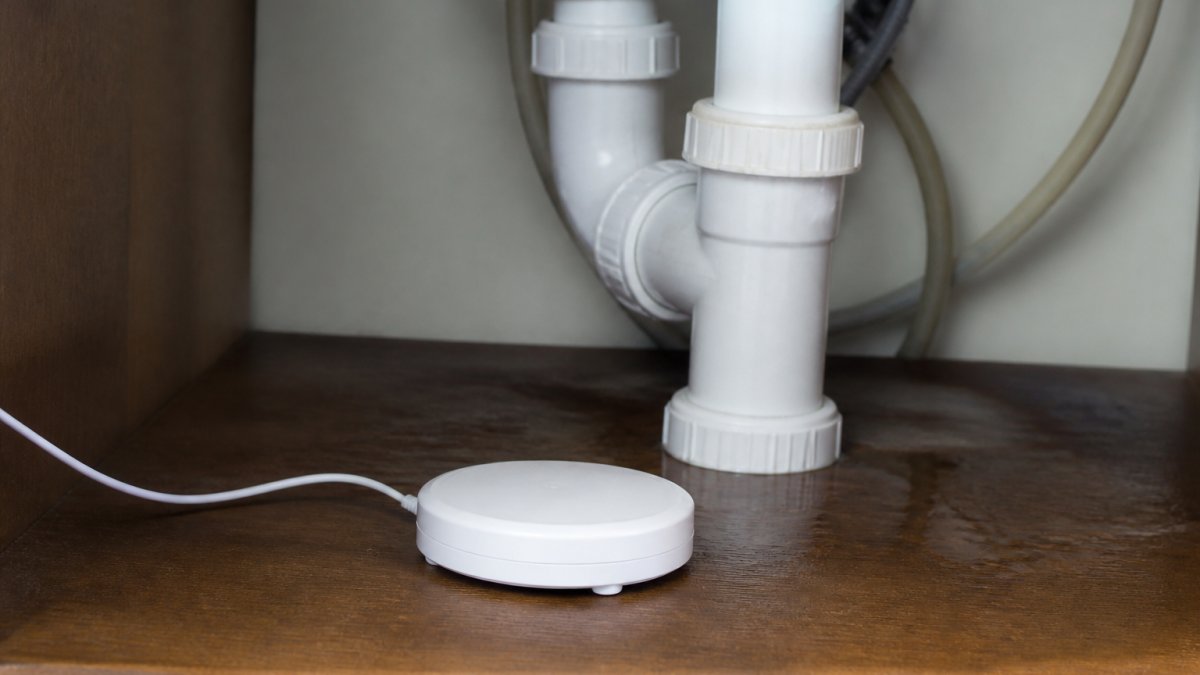
A water leak sensor sits near a pipe, appliance, or water heater and sounds an alarm or sends a phone alert the moment it detects moisture. At Osime Insurance Agency, Inc, we understand questions about water leak sensors and insurance premiums.
Water damage is one of the most common reasons homeowners file a claim, and a single unresolved leak can turn a small plumbing repair into a gutted room.
Why Water Damage Drives Insurance Costs
Water damage claims are frequent, expensive, and largely preventable, which is why insurers care about leak detection.
A slow leak under a sink can run for weeks before anyone notices. By then, the cabinet, subfloor, and drywall may all need replacing.
The Insurance Information Institute's research on homeowners claims notes that water damage and freezing consistently rank among the top causes of home insurance losses.
The Difference Between a Discount and a Prevented Claim
A discount and a prevented claim are two different financial events, and only one shows up on your bill next month.
- A discount is a small credit applied to your premium for having a qualifying device.
- A prevented claim is a loss that never happens, which keeps your claim history clean.
The discount is visible and modest. The prevented claim is invisible and often worth far more over time. Filing even one water claim can affect your rate for years, and repeated claims can make you harder to insure.
Water Leak Detector Insurance Discount: What Insurers Actually Offer
A water leak detector insurance discount is a premium credit some carriers apply when a qualifying leak detection device is installed and documented on a policy. It is not universal or automatic, and the amount varies by insurer, state, policy form, device type, and whether the device is professionally monitored.
What we can do is give you a repeatable process for confirming what your own policy allows.
Why Discounts Vary So Much
Three forces drive the variation:
- Underwriting appetite. Some carriers build credits into their filed rates; others treat leak detection as a claims-mitigation preference with no filed credit at all.
- State filings. A credit approved in one state may not exist in another, even for the same national carrier; it must be filed and approved before an agent can apply it.
- Policy form and endorsement. The credit may live in a homeowners endorsement, a dwelling fire form, or a high-value package, and may only attach at new business or renewal rather than mid-term.
Device Types and What Insurers Typically Require
Insurers generally sort leak devices into tiers, and the tier determines whether a credit is available:
| Device tier | What it does | Typical insurer stance |
|---|---|---|
| Point sensor (battery or plug-in) | Alarms or pushes an alert when moisture is detected at one spot | Often no credit on its own; may count toward a broader protective-device credit |
| Smart Wi-Fi sensor with app alerts | Sends remote notifications; may integrate with other smart-home devices | Sometimes eligible, especially when paired with monitoring |
| Professionally monitored system | Alerts route to a monitoring center that can notify you or a plumber | More commonly eligible; monitoring contract often required |
| Whole-home flow monitor | Learns water-use patterns and flags abnormal flow | Frequently eligible; may require professional install |
| Automatic shutoff valve | Closes the main water line when abnormal flow or a leak is detected | Most likely to qualify for a meaningful credit; usually requires licensed installation |
The credit generally scales with how much damage the device can prevent without a human in the loop. A beeping puck under the sink cannot stop a burst supply line while you are at work; a shutoff valve can.
Documentation Insurers May Request
Before a credit is applied, expect to provide some combination of:
- A paid invoice or installation receipt showing the device make and model
- The installing contractor's license number, for plumbed shutoff valves
- A monitoring contract or account number, if professionally monitored
Keep copies. If you switch carriers, the same paperwork supports the credit on the new policy.
A Practical Eligibility Checklist
Work through this before you buy anything:
- Pull your declarations page and note the policy form number.
- Ask your agent whether a water leak detection credit is filed and available on that form in your state.
- Ask which device tiers qualify and whether professional installation or monitoring is required.
Homeowners Insurance Water Damage Coverage: What's Included and Excluded
Homeowners insurance water damage coverage typically pays for sudden and accidental water damage, such as a burst pipe or a failed appliance hose, but generally not for long-term seepage, poor maintenance, or flooding.
That gap is where homeowners get burned. A leak sensor helps because it catches the problem while it is still sudden and accidental, not after months of slow seepage your policy excludes.
Common exclusions to know:
- Gradual leaks and repeated seepage
- Damage from lack of maintenance
- Flood damage, which requires separate flood coverage
The FEMA's guidance on flood versus homeowners coverage explains why flood is always a separate policy. A leak sensor does not change that.
Water Leak Detection Cost: Devices, Installation, and Break-Even
Water leak detection cost ranges from a battery-powered point sensor you install yourself to a professionally plumbed automatic shutoff valve with a monitoring subscription. Rather than quote a single number that will be wrong for your home, understand each tier's cost structure and how to run the break-even math yourself.
The Four Cost Tiers
| Option | Typical setup | Best for | Ongoing cost |
|---|---|---|---|
| Basic battery sensor | Self-installed, local alarm only | Renters, tight budgets, first step | Battery replacement |
| Smart Wi-Fi sensor | Self-installed, phone alerts | Most homeowners | None, or app subscription |
| Professionally monitored system | Professional install, monitoring center | Vacation homes, high-value homes | Monthly monitoring fee |
| Automatic shutoff valve | Licensed plumber install, flow monitoring | Homes with leak history or older plumbing | Subscription or service plan |
For current pricing, ask a licensed installer or your carrier's approved-vendor list, a quote from last year is not a budget.
How to Run the Break-Even Math
The break-even calculation has three inputs you can estimate without a spreadsheet:
- Total cost of ownership. Add the device price, installation labor, any monitoring subscription over the years you expect to keep the device, and replacement batteries or parts. A cheap sensor with a monthly subscription can cost more over five years than a mid-range smart sensor with no fee.
- Your water deductible. This is what you would pay out of pocket on a covered water claim. If your deductible is high, a small leak may not be worth filing at all.
- The cost of a prevented claim. This is the hard part, because it is invisible. It includes the deductible you did not pay, the premium increase you did not absorb, and the claims history you kept clean.
A simple way to frame it: if the device plus installation costs less than your deductible and prevents even one claim over its service life, it has likely paid for itself. A premium credit speeds the payback.
What the Discount Does and Does Not Do
A device credit is usually a small percentage off a portion of your dwelling coverage, real money, but rarely enough on its own to justify a purchase. The larger financial effect comes from avoiding the claim, which protects your rate at renewal and keeps you insurable with carriers that screen on claims history.
Basic Sensors vs. Smart Systems
A basic sensor beeps; a smart sensor texts you. That difference sounds small until you are at work and a hose bursts in the basement. Basic sensors only help if someone is home to hear them, while smart systems send remote alerts and can integrate with an automatic shutoff valve, for most families, worth the extra cost.
Installation and Maintenance Costs to Budget For
Beyond the purchase price, budget for:
- Labor. A licensed plumber installing a shutoff valve is a real cost, and some carriers require it for the credit.
- Monitoring. A monthly or annual fee if alerts route to a monitoring center.
- Batteries and sensors. Point sensors need battery replacement; some smart sensors have sealed multi-year batteries.
Test each device twice a year, and keep your installation paperwork with your insurance documents so the credit and any future claim are easy to support.
Automatic Water Shutoff Valve Insurance Discount: Requirements and Eligibility
An automatic water shutoff valve insurance discount is a credit some carriers offer for a device that closes your main water line when it detects abnormal flow. These systems cost more than a simple sensor but prevent far more damage.
Requirements usually include:
- Professional installation by a licensed plumber
- A device that meets the carrier's approved list
- Proof of installation, often an invoice or certificate
Eligibility varies by carrier and state. Ask your agent whether your policy form includes the credit before you buy the valve. Buying first and asking later is a common and costly mistake.
Where to Place Leak Sensors for Maximum Protection
Place leak sensors where water is most likely to appear: under sinks, behind the washing machine, beside the water heater, near the basement floor drain, and under the dishwasher, the spots where a small leak becomes a big repair.
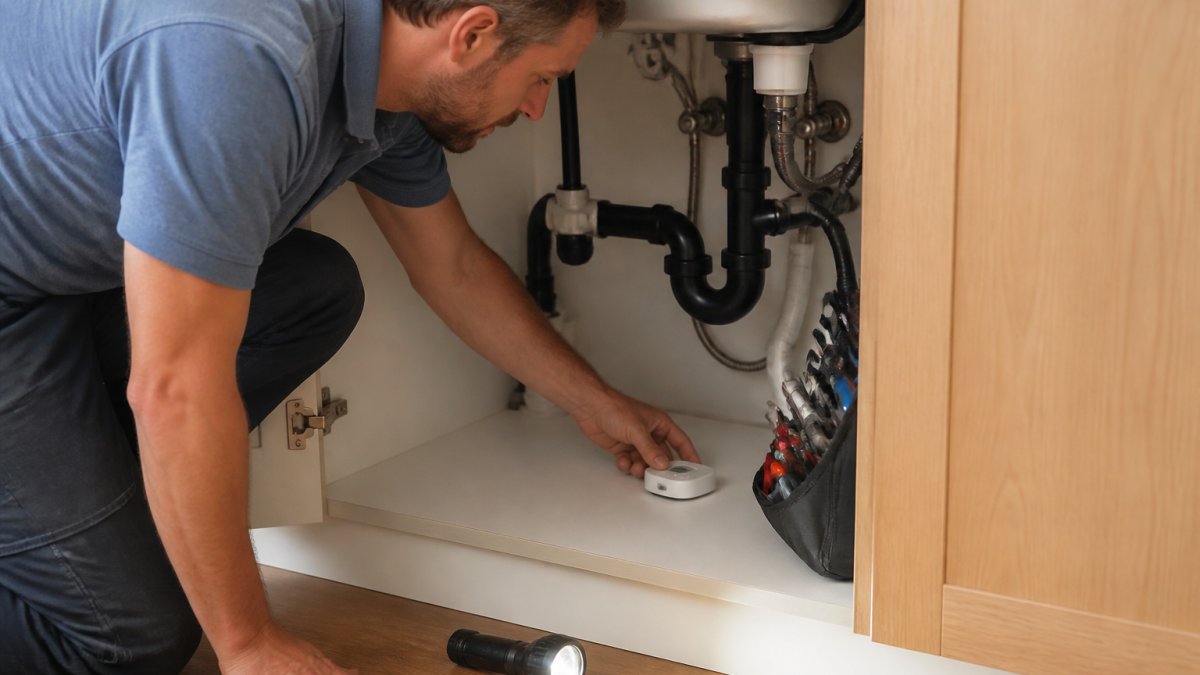
A simple placement checklist:
- Under every sink, including bathrooms
- Behind and beside the washing machine
- At the base of the water heater
Test each sensor after installation. A sensor that never gets tested is a sensor you cannot trust.
Common Mistakes That Cost Homeowners Money
The biggest mistake is buying a device and assuming the discount is automatic. It is not, you usually have to ask, and prove installation.
Other costly errors:
- Placing sensors only in the basement and ignoring upper-floor bathrooms
- Skipping the automatic shutoff valve in a home with repeated leak history
- Filing a small claim instead of paying out of pocket, which can raise your rate
A second mistake is ignoring maintenance. A sensor with a dead battery protects nothing. Set a reminder to test each device twice a year.
Water damage is one of the few home risks you can actually get ahead of, but only if you pair the right device with the right coverage. At Osime Insurance Agency, Inc, our specialists help homeowners review their water damage coverage, check whether leak detection credits apply to their policy, and understand exclusions before a leak becomes a claim.
Frequently Asked Questions
Can water leak sensors lower homeowners insurance premiums?
They can, but not automatically. Some insurers offer a water leak detector insurance discount when you install an approved device, often a small percentage off your premium. The savings vary widely by carrier and state. More importantly, early detection can prevent a claim, which protects your claim history and future rates. Ask your insurer whether they recognize your specific device before you buy.
Do insurance companies offer discounts for smart water leak detectors?
Many do, but eligibility rules differ. Some require a professionally monitored system or an automatic water shutoff valve, while others accept self-monitored devices with mobile alerts. Documentation matters: keep your receipt, model number, and installation date. Call your agent and ask exactly which devices qualify and what proof they need. A quick conversation before purchase prevents surprises.
Does homeowners insurance water damage coverage include leak detection devices?
Standard homeowners insurance water damage coverage typically pays for sudden, accidental water damage, such as a burst pipe. It usually does not pay for the leak detection device itself or for damage from long-term neglect. That distinction matters: a sensor that alerts you early helps you act before damage becomes severe, which keeps the claim smaller and avoids denial for failure to maintain the home.
What is the average cost of leak detection, and is it worth it?
Water leak detection cost depends on the system. Basic point sensors are inexpensive, while smart systems with automatic shutoff and monitoring subscriptions cost more upfront. The break-even math is simple: compare the device cost against your deductible and the premium increase a water claim could trigger. For most homeowners, preventing one claim pays for the system many times over. Get a quote from your insurer to see any discount first.