 How-to
Retail Insurance Claims: How to Avoid Them Before They Happen
Quick Summary
The most common retail insurance claims involve customer slip, trip, and fall injuries, theft and burglary, and weather, fire, or water damage to property and inventory. Most can be reduced with routine floor inspections, clear aisles, documented inventory records, loss-prevention controls, and an annual review of your policy limits and exclusions.
- Walk the sales floor every hour during busy periods to catch spills and debris early.
- Post a wet floor sign immediately whenever you mop or clean up a spill.
- Photograph new inventory on arrival and keep receipts and copies off-site or in the cloud.
- Standard property policies often exclude employee theft and need a separate crime endorsement.
- Notify your insurer as soon as possible, because many policies require prompt notice of a loss.
Table of Contents
- Common Retail Insurance Claims and What Causes Them
- How to Prevent Slip, Trip, and Fall Injuries in Your Store
- Protecting Inventory and Stopping Theft Before It Happens
- Step-by-Step: What to Do the Moment an Incident Occurs
- How to File a Business Insurance Claim Without Losing Money
- Business Insurance Claim Mistakes That Delay or Reduce Payouts
- Checking Your Policy Limits, Deductibles, and Exclusions This Year
- Frequently Asked Questions
Common Retail Insurance Claims and What Causes Them
Last Updated: November 7, 2026
Retail businesses face a steady stream of insurance claims, and most of them come from a small set of causes.
Retail insurance is the coverage a store owner buys to protect the business from these losses. It usually combines general liability, commercial property, and business interruption coverage. Each piece answers a different kind of loss.
Most claims fall into three groups, and each one calls for a different kind of prevention.
Customer Injuries and Premises Liability
When a customer gets hurt inside or near your store, general liability coverage usually responds. Premises liability is the legal duty a business owner has to keep a property reasonably safe for visitors.
Common injury sources include:
- Wet or freshly cleaned floors
- Loose floor mats and uneven tiles
- Merchandise stacked too high on shelves
- Cords and boxes left in walkways
- Poorly lit parking lots and entrances
Retail Theft, Burglary, and Shoplifting
Theft is one of the most frequent losses for retailers. Shoplifting, employee theft, and after-hours burglary each create different claim paths. Commercial property policies typically cover losses from burglary and robbery, but many policies limit or exclude some theft types, so read the terms closely.
Weather, Fire, and Water Damage to Property and Inventory
Storms, fires, and burst pipes can damage a building, its fixtures, and everything on the shelves. Commercial property insurance usually covers these events, subject to your deductible and policy limits. Water damage is a common source of claims because a small leak can ruin stock for weeks before anyone notices.
How to Prevent Slip, Trip, and Fall Injuries in Your Store
Slip, trip, and fall injuries are among the most common and costly customer injury claims for retailers. Most of them are preventable with a few consistent habits.
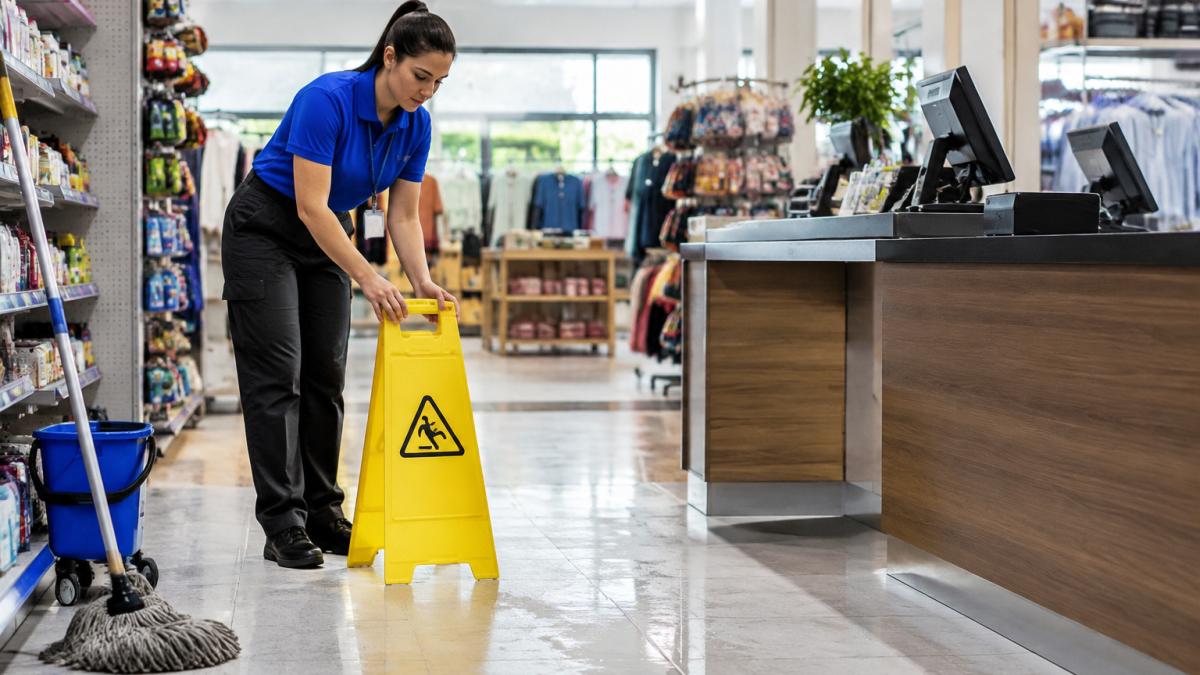
Here is a simple routine to follow:
- Walk the floor every hour during busy periods. Look for spills, debris, and loose items.
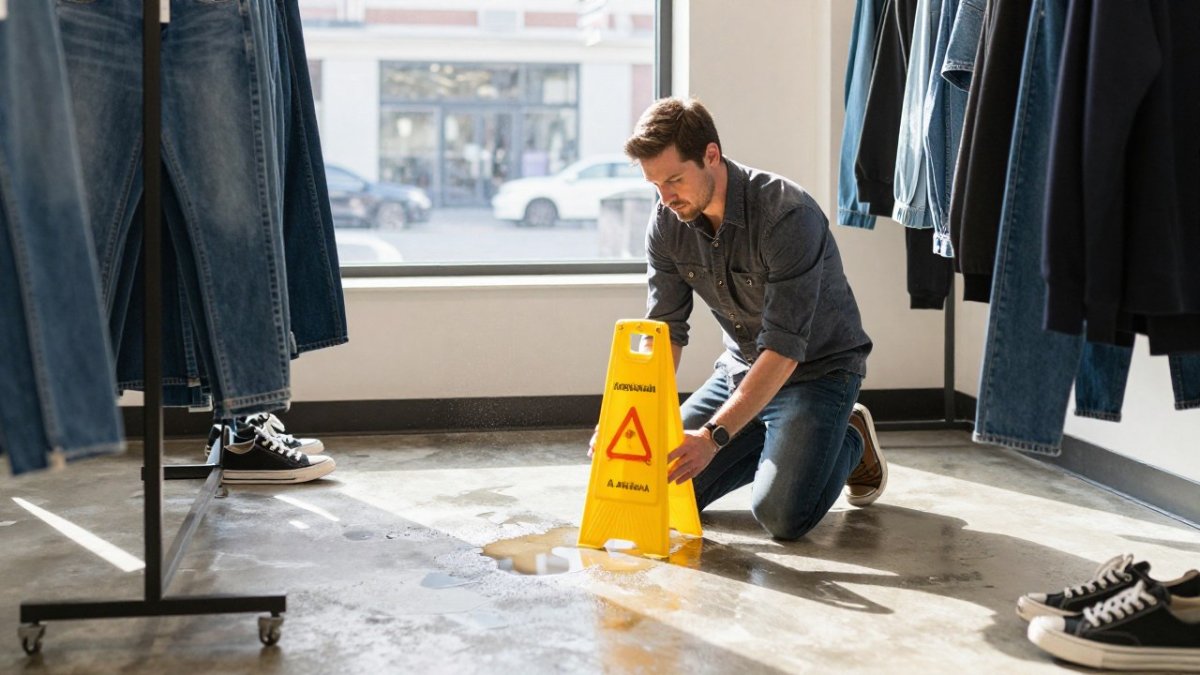
- Post a wet floor sign right away whenever you mop or clean up a spill.
- Keep aisles clear. Keep boxes, carts, and displays out of walkways.
- Secure or remove floor mats that curl, slide, or have worn edges.
- Check lighting at entrances, stairs, and parking areas.
- Log each inspection with the date, time, and what you fixed.
A written log also helps if a claim is filed later.
Watch out: A wet floor sign does not replace cleanup. If the spill stays on the floor, the sign alone may not protect you from liability.
Protecting Inventory and Stopping Theft Before It Happens
Inventory loss hurts retailers twice: the product is gone, and the claim is hard to prove without records. A theft claim often depends on how you value and document inventory before and after the loss.
Understand which theft claims your policy actually covers
Commercial property policies typically respond to burglary (forced entry into a locked premises) and robbery (theft by threat or force).
Watch out: A standard property policy may cap or exclude theft by employees, and some forms require evidence of forced entry before a burglary claim will pay. Read the theft and dishonesty sections of your policy before you need them.
Build an inventory record that supports a claim
Insurers pay based on what you can prove you had. A practical record includes:
- A periodic count with the date and the person who performed it
- Purchase invoices and supplier receipts tied to SKUs
- Photographs of stockrooms, displays, and high-value cases
- A running shrinkage log that separates known loss (damage, returns) from unknown loss
- Off-site or cloud copies so a fire or flood does not destroy the only record
When a loss occurs, an adjuster may compare your pre-loss records to your post-loss count.
Loss-prevention controls that reduce both theft and claims
- Security cameras covering entrances, registers, stockrooms, and loading areas, with footage retained long enough to be useful
- A monitored alarm system for after-hours protection
- Locked cases or behind-counter storage for high-value items
- Restricted stockroom access and a key or badge log
- Regular cycle counts rather than a single annual count
- A written cash-handling and refund procedure to reduce internal loss
The documentation habit that speeds up every claim
Photograph new inventory when it arrives, keep receipts, and store copies off-site or in the cloud. When a loss happens, these records let you support the claim with numbers instead of estimates, which can help support a claim.
Step-by-Step: What to Do the Moment an Incident Occurs
Acting quickly after an incident protects both the people involved and your claim. Follow these steps in order.
- Make sure everyone is safe. Call 911 for serious injuries or fire.
- Give first aid within your training and offer to call for medical help.
- Secure the area so no one else gets hurt or evidence is lost.
- Take photos and video of the scene, damage, and any hazard.
- Collect names and contact information from injured people and witnesses.
- Write a detailed incident report while the events are fresh.
- Notify your insurance agent or carrier as soon as possible.
- Keep damaged items until the adjuster has reviewed them.
Speed matters here. Many policies require prompt notice.
The steps below are followed in order after an incident, and the article notes that speed matters because many policies require prompt notice.
| Step | What to do | Time or frequency |
|---|---|---|
| Make sure everyone is safe | Call 911 for serious injuries or fire | Immediately |
| Give first aid | Within your training; offer to call for medical help | Immediately |
| Secure the area | Prevent further injury and protect evidence | Immediately |
| Take photos and video | Scene, damage, and any hazard | At the scene |
| Collect contact information | Injured people and witnesses | At the scene |
| Write an incident report | Detailed account while events are fresh | While fresh |
| Notify your insurer | Agent or carrier | As soon as possible |
| Keep damaged items | Until the adjuster has reviewed them | Until adjuster review |
How to File a Business Insurance Claim Without Losing Money
Filing a business insurance claim is simpler when you prepare before the loss. The goal is to give your insurer clear, complete information so the claim moves forward without delay.
Here is what most claims require:
- The policy number and the date of loss
- A written description of what happened
- Photos, videos, and receipts for damaged or lost property
- Inventory records showing what you had before the loss
- Repair estimates and invoices
- A record of any business income you lost during closure
Keep copies of everything you send. Ask for a claim number and the name of the adjuster assigned to your file.
For more detail on the process, see our guide on how to file a comprehensive insurance claim, which walks through each stage.
Business Insurance Claim Mistakes That Delay or Reduce Payouts
Some of the most common claim problems are avoidable.
Watch for these frequent mistakes:
- Reporting the loss late. Missed deadlines can give the insurer grounds to deny or reduce a claim.
- Throwing away damaged goods before the adjuster inspects them.
- Guessing at inventory values instead of using records.
- Making repairs before documenting the damage.
- Signing a settlement without reading the full terms.
- Missing a policy exclusion you didn't know about.
If a claim is denied, ask for the reason in writing and review the policy language. Our article on what happens when an insurance claim is denied explains the next steps you can take.
Delays also happen when communication breaks down. Responding quickly to adjuster requests keeps the file moving. For more on why this happens, read about why insurance claim communication delays happen.
Checking Your Policy Limits, Deductibles, and Exclusions This Year
A policy that fit your store three years ago may not fit it today. Inventory grows, equipment gets more expensive, and customer traffic changes. Connecting each common claim to the coverage line that pays it is a useful way to find gaps.
Map each claim type to the coverage that responds
- Customer slip, trip, or fall: general liability, specifically the premises liability portion. Check the per-occurrence limit and whether medical payments coverage is included.
- Shoplifting or burglary: commercial property, subject to the theft sublimit and any forced-entry requirement.
- Employee theft: usually excluded from property and requires an employee dishonesty or crime endorsement.
- Fire, storm, or burst pipe: commercial property, subject to deductible and any separate wind or water sublimits.
- Lost income during closure: business interruption, which typically requires a covered property loss and a waiting period before benefits begin.
- Employee injury: workers' compensation, which is separate from general liability.
Limits, deductibles, and exclusions to check
- Coverage limits. Confirm property limits match the current replacement cost of inventory, fixtures, and building improvements, not their depreciated value.
- Deductibles. A higher deductible lowers premiums but means you pay more out of pocket on each claim. Choose an amount you can cover without straining cash flow.
- Coinsurance or margin clauses. Some property forms penalize you if you insure for less than a required percentage of value. Ask whether your policy has one.
- Exclusions. Check for flood, earthquake, employee dishonesty, and certain theft types. These are common retail gaps.
- Business interruption waiting period. Many policies have a short waiting period before lost-income benefits begin, which matters for a store that closes for a few days.
A simple annual review routine
Once a year, compare your current inventory value and fixture costs to your policy limits, confirm your deductible is still affordable, and ask your agent to explain any exclusion you do not understand. Keeping an accurate inventory list also helps you set the right limits, which is covered in more detail in our guide on documenting business assets for insurance.
Many store owners also ask whether higher liability limits are worth the cost. Our overview of the benefits of increasing general liability coverage limits can help you start that conversation.
To review your store's coverage with a licensed agent, contact Osime Insurance Agency, Inc. We can explain your options in plain language and help you find coverage that fits your business. Get Your Free Quote today.
Frequently Asked Questions
What are the most common insurance claims for retail businesses?
The claims retail businesses file most often include customer slip, trip, and fall injuries, property damage from theft or burglary, fire and smoke damage, water damage, and weather-related losses to buildings and inventory. Customer injury claims are usually covered under general liability insurance, while property and inventory losses fall under commercial property coverage. Reviewing which hazards your store faces and matching them to the right policy is the first step to avoiding surprises when a claim occurs.
Does retail business insurance cover theft or property damage?
Commercial property insurance typically covers theft, burglary, and vandalism of your building, fixtures, and inventory, subject to your policy's limits and deductible. Coverage for employee theft or fraud is usually a separate endorsement. Cash losses and certain high-value items may have sublimits. Ask your agent to confirm which perils are included, what the deductible is, and whether your inventory is valued at cost or replacement value.
How can retailers prevent slip-and-fall claims?
Start with routine inspections of aisles, walkways, and entrances several times a day, especially during rain or snow. Clean spills immediately, post wet floor signs, keep mats secured, and make sure lighting is adequate in stockrooms and parking areas. Train employees to report hazards and document each cleanup. Keeping a simple inspection log also helps you show a reasonable prevention effort if a customer files a claim.
What should a retail business do after a customer is injured?
First, make sure the customer receives medical attention and get their contact information. Document the scene with photos and written statements from employees and witnesses while details are fresh. Do not admit fault or promise payment. Report the incident to your insurer as soon as possible, typically within the timeframe in your policy, and keep copies of all correspondence and records.